
Flights to Fiji span a huge range, but the averages are reassuringly affordable — a return economy ticket from Australia sits somewhere between AUD 380 and AUD 800 for most of the year.
Fiji is one of the most accessible tropical destinations in the Pacific, and part of its appeal is how predictable the pricing can be once you know the averages. Almost every international flight pours into Nadi International Airport, served by a competitive mix of full-service and low-cost carriers, and the fares they publish sit in a clear band shaped by route, season, cabin and how far ahead you book. Knowing the average price for your route is the fastest way to tell a genuine sale fare from an ordinary peak-season fare.
This guide pulls together the average flight prices to Fiji from the most popular departure points — Australia, New Zealand, North America, Asia and Europe — broken down by route, season and cabin class. We also explain why those averages move the way they do, where the cheapest and most expensive windows fall, and how to land a fare at or below the average for your route. Once you have a benchmark in mind, you can book your flight, hotel, rental car, eSIM, scooter hire and Fiji tours all from this one page.
Average Return Fares to Fiji by Route
The table below shows typical average return fares to Nadi across the busiest departure points, with separate columns for economy and business class and a short note on each route. These are broad averages across the year — sale fares dip below the bottom of each range, and peak-season fares sit above it.
Average Fares by Season in Fiji
The single biggest driver of the average fare to Fiji is the season you fly in. The averages below track the calendar of demand from Australia, New Zealand and North America, with the peak falling in the June–September dry season and the mid-December festive rush. Knowing where your travel month sits in this cycle tells you instantly whether a fare you have found is cheap, roughly average, or overpriced.
Wet season (Dec–Mar)
Lowest averageThe cheapest average fares of the year — February and March often sit at the very bottom of the price range, with sale fares filling the cabin.
Shoulder (Apr–May)
Low–Medium averageFares climbing back up as the weather dries out, but still well below the peak; a strong value-for-money window.
Dry season (Jun–Sep)
Highest averagePeak demand with school holidays in Australia and New Zealand pushes average fares to their annual high.
Shoulder (Oct–Nov)
Low–Medium averageFalling again as crowds thin and the weather stays warm — one of the best value windows before the December rush.
Festive (mid-Dec–early Jan)
High averageHoliday demand spikes fares sharply; travel in the first two weeks of December for the best festive-season value.
Average Fares by Cabin Class
Cabin class is the other big lever on price. The four cabins that fly to Fiji — economy, premium economy, business class and the partner-supplied first-class equivalent — sit in clearly separated price bands, with generous jumps as you move up. Here is what to expect from each.
Economy
AUD 380–800 return (Australia)Economy is the cabin most travellers book and where the widest spread of fares sits. Sale fares on Jetstar can dip well below AUD 400 return from the east coast of Australia, while full-service economy on Fiji Airways and Qantas sits in the AUD 500–800 range for a typical return trip. Long-haul economy from North America averages USD 750–1,300 return.
Premium Economy
AUD 900–1,500 return (Australia)Premium economy is offered on Fiji Airways long-haul sectors and a handful of Australia routes. It adds a reclining seat, a lighter cabin and an upgraded meal for roughly double the economy fare — a worthwhile step-up on the 10-hour North America and Hong Kong sectors.
Business Class
AUD 1,400–2,600 return (Australia)Business class to Fiji averages around AUD 1,400–2,600 return from Australia and New Zealand, rising to USD 3,200–5,700 on the North American long-haul. Fiji Airways business class includes lounge access, a lie-flat (on long-haul) or cradle seat, premium dining and generous baggage.
First Class
On request — limited supplyThere is no dedicated first-class cabin to Fiji on most carriers, but Fiji Airways business is widely treated as the premium cabin on the route. For a genuine first-class product, fly a long-haul partner (Qantas / Air New Zealand / United) into the hub and connect.
What Moves the Average Fare to Fiji?
Average fares to Fiji are not random — they are shaped by a handful of reliable forces. Demand from Australia and New Zealand is the dominant one, with school-holiday calendar weeks forcing the June–September and December–January peaks that inflate averages. Supply is the second: Fiji Airways sets the floor on most long-haul routes, while Jetstar, Virgin Australia and Air New Zealand keep the busy corridors competitive. Whenever a new entrant or a sale appears, the average for that route drops noticeably for a few weeks.
The third force is how far ahead you book. Average fares are at their lowest 3–6 months before departure, when airlines are still filing their sale fares and the cheapest inventory is open. Inside the four-week window, fares rise to the top of their range as the remaining seats become scarce, and it is rare to find anything close to the average for the season this late. Booking ahead, watching sales, and staying flexible on day of the week are the three habits that put you at or below the average for your route.
- Average economy return fares from Australia sit between AUD 380 and AUD 800 depending on season and airline
- Average business class return fares from Australia run from around AUD 1,400 up to AUD 2,600
- From North America expect an average of USD 750–1,300 return in economy and USD 3,200–5,700 in business
- The cheapest fares fall in February, March, October and November; the highest in June, July and August
- Sale fares on Fiji Airways and Jetstar routinely run 20–40% below the average for the season
- Connecting via Sydney, Brisbane or Auckland often beats a direct fare on thinner routes
- Book 3–6 months ahead to land a fare at or below the average for your travel month
- Fares rise sharply inside 4 weeks of departure, especially in the peak dry season
Average Trip Cost: Flights Plus a Few Nights
A cheap flight is only one part of the budget. Pairing the average economy fare with a few nights at a mid-range Fiji hotel gives a useful sense of the all-in cost of a Fiji trip. As a rough guide: an Australian traveller paying AUD 500 for a return economy fare and AUD 200–350 per night for a comfortable resort room is looking at around AUD 1,700–2,550 for a relaxed week, excluding meals and activities. Travelling in shoulder season pulls both the flight and the room rate down, which is why October and November consistently deliver the best average total trip cost.
From North America the math shifts — a USD 1,000 return fare plus the same USD 130–230 resort room puts a week-long trip closer to USD 1,800–2,600 — so a longer stay makes the long flight amortise better, and the shoulder season again offers the best blend of low flight and room averages. Book the hotel at the same time you lock in the flight to keep the whole trip cost close to the average rather than the peak.
Where to Stay in Fiji
Denarau Island is the easiest base for families and first-timers, close to Nadi Airport. The Mamanucas and Yasawas offer the classic overwater bure experience, while the Coral Coast suits travellers wanting a quieter mainland stay with waterfalls and villages nearby.
Book Hotels in FijiRenting a Car in Fiji
A rental car is a great option if you are based around Nadi, Denarau or the Coral Coast and want to explore waterfalls, villages and viewpoints at your own pace. Driving is on the left.
Stay Connected with a Fiji eSIM
Skip the airport SIM-card queue and install a Fiji eSIM before you land, so you have data the moment you arrive at Nadi.
Get a Fiji eSIMRent a Bike or Scooter in Fiji
A bike or scooter is an easy, affordable way to explore Denarau or Nadi town — book one online in advance and skip the roadside haggling once you arrive.
Rent a Bike or ScooterThings to Do in Fiji
After a well-priced flight comes the part everyone flies for — world-class reefs, waterfalls and cultural experiences, from snorkeling and diving in the Mamanucas to village visits, island-hopping cruises and sunset kava ceremonies. Browse and book top-rated Fiji tours below.
Fiji on Instagram
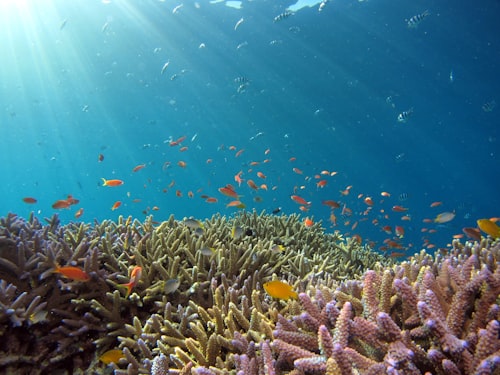
Need a little push to lock in that fare? Here is a glimpse of what awaits — turquoise lagoons, overwater bures and reefs teeming with color. Follow #fiji on Instagram for more.





Frequently Asked Questions
What is the average cost of a flight to Fiji?
The average economy return fare to Fiji is around AUD 380–800 from Australia, NZD 420–850 from New Zealand, and USD 750–1,350 from North America. Business class averages AUD 1,400–2,600 from Australia, NZD 1,400–2,700 from New Zealand, and USD 3,200–5,700 from North America. The exact fare depends on the route, the season and how far ahead you book.
How much does a flight from Australia to Fiji cost?
From Australia, a return economy ticket to Nadi averages around AUD 380–700 from Sydney and Brisbane and AUD 450–800 from Melbourne, depending on the season. Business class averages AUD 1,400–2,600 return. Sale fares on Jetstar can drop below AUD 400 return, while peak July fares can push over AUD 900.
How much does a flight from the US to Fiji cost?
From the US, an economy return to Nadi averages USD 750–1,350, and business class averages USD 3,200–5,700. Fares are usually lowest from Los Angeles and San Francisco, the two cities with direct Fiji Airways and United services. Watch for sales 4–6 months out to land a fare below the average.
What is the average business class fare to Fiji?
Business class to Fiji averages AUD 1,400–2,600 return from Australia, NZD 1,400–2,700 from New Zealand, and USD 3,200–5,700 from North America. That buys lie-flat (on long-haul) or cradle seating, lounge access, premium dining and generous baggage on Fiji Airways, Qantas, Virgin Australia, Air New Zealand and United.
Are flight prices to Fiji higher in the dry season?
Yes. Average fares are highest in the June–September dry season and over the mid-December to early-January festive period, when demand from Australia and New Zealand peaks. The lowest averages fall in February, March, October and November, when wet and shoulder-season demand is weakest.
How much does it cost to fly from New Zealand to Fiji?
From New Zealand, a return economy ticket to Nadi averages NZD 420–850 depending on the route and season, with Auckland the cheapest and most direct option at around NZD 420–690. Business class from New Zealand averages NZD 1,400–2,700 return, peaking in the July school holidays.
Is it cheaper to fly direct or connecting to Fiji?
It depends on the route. On busy corridors like Sydney, Brisbane and Auckland to Nadi, direct fares are competitive and often cheaper than connecting. On thinner routes (Perth, Wellington, Christchurch, Europe), a well-priced connection via Sydney, Brisbane, Auckland, Hong Kong or Los Angeles frequently beats the direct fare, especially in shoulder season.
Know the Average, Pay Below It
The average flight price to Fiji is a tool, not a target. Use it to judge whether the fare in front of you is a bargain, fair value, or peak-season pricey — then book 3–6 months ahead, travel in shoulder season when you can, and watch for Fiji Airways and Jetstar sales to land a fare at or below the average. Once your flight is locked in, your hotel, rental car, eSIM, scooter and Fiji tours all live right here on this page. The reefs of the Mamanucas will be waiting on the other side of a well-priced ticket.
Keep Exploring Fiji
Flights to Fiji
The complete guide to flights to Fiji — airlines, fares, durations and airport tips.
Airlines Flying to Fiji
Every carrier that flies to Fiji, with cabin classes and route maps.
International Flights to Fiji
Long-haul routes and airlines into Nadi from the US, Australia, NZ, Asia and Europe.
How Long Are Flights to Fiji?
Flight times and routes from major cities around the world to Nadi.
Fiji Airports
A full guide to Nadi (NAN), Nausori and Fiji's domestic airfields.
Cheapest Time to Fly to Fiji
The cheapest months, days and seasons to book flights to Nadi.
Flights to Nadi
Cheap flights into Nadi International Airport, the main international gateway to Fiji.