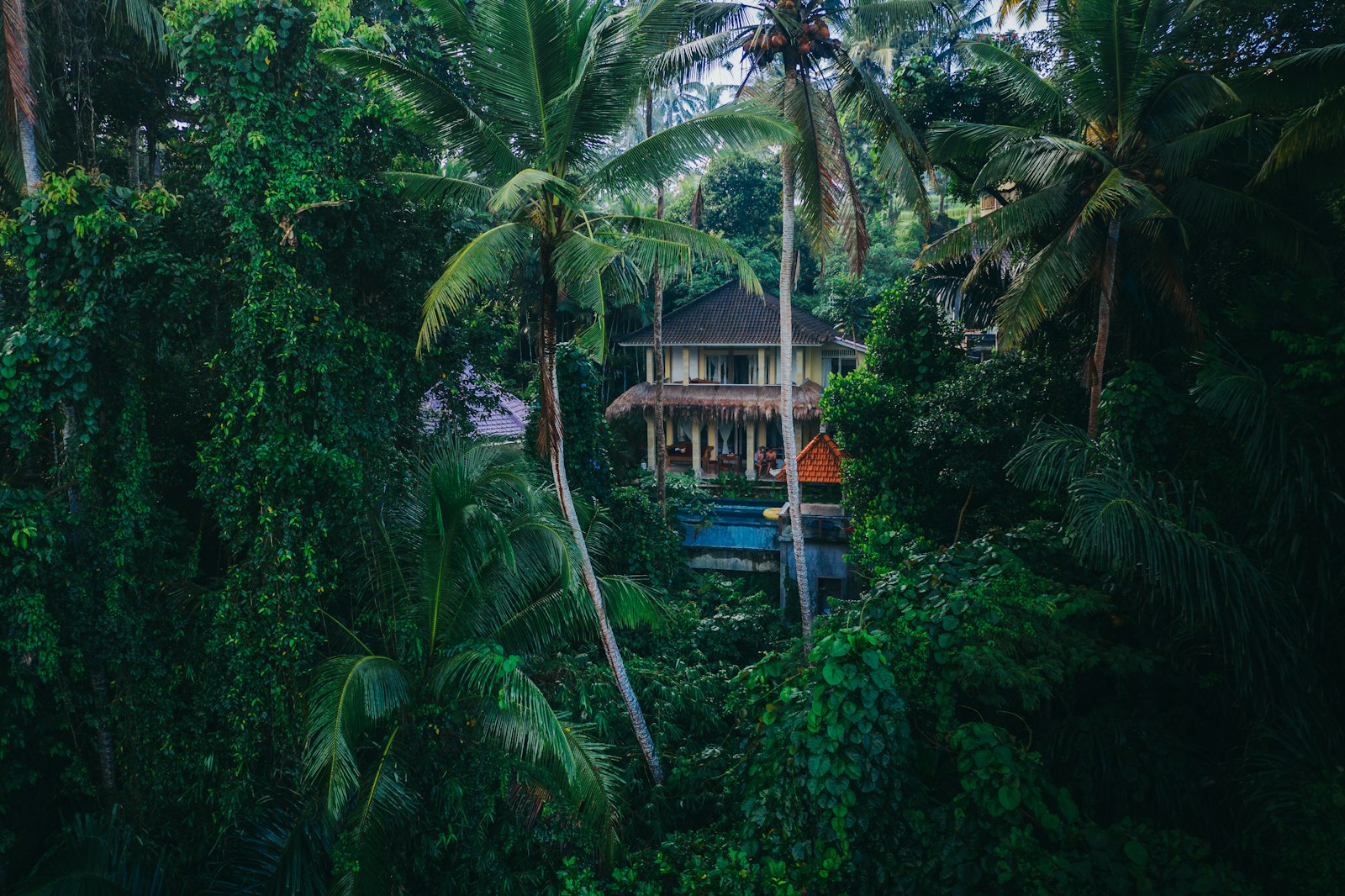
Few places on earth blend deep-tissue wilderness with genuine hospitality the way Bali does. Step off the road in Ubud or Sidemen and the noise of scooters gives way to frogs, birdsong, and the rush of a hidden river, the air thick with steam and the scent of wet earth and frangipani. The island's rainforest lodges sit inside that landscape, not on top of it — built from bamboo and reclaimed timber, powered by the sun and the streams that run through their valleys, and run by families whose villages they quietly help sustain. This guide introduces the best eco-lodges in the Bali rainforest, explains what makes each one different, and gives you the flights, hotels, rental cars, eSIMs, bikes, and tours you need to plan a jungle trip that leaves the island better than you found it.
What Makes a Great Bali Rainforest Eco-Lodge?
A true eco-lodge is not just a lodge in a pretty place. It is a property whose design, energy, water, waste, and staffing genuinely minimise its footprint and return value to the surrounding ecosystem and community. The best Bali rainforest stays are built from local and reclaimed materials — bamboo, teak, alang-alang thatch — without concrete foundations that scar the soil. They draw power from solar panels and small micro-hydro turbines, capture rainwater and protect mountain springs, compost their waste, and grow much of their own food. Crucially, they are staffed and often owned by the Balinese villagers whose land they occupy, so the money you spend stays in the valley that hosts you.
The result is a stay that feels different from a conventional resort. You hear the forest at night rather than air-conditioning, you eat food grown metres from your table, and the people who welcome you are the stewards of the land you are sleeping on. The best properties go further, running reforestation, coral-restoration, and wildlife-monitoring programmes that guests can join — turning a holiday into a quiet act of conservation.
The Best Eco-Lodges in the Bali Rainforest
From luxury tented camps in the Keliki Valley to off-grid bamboo bungalows deep in the Sidemen jungle, these are the Bali rainforest eco-lodges that set the standard for sustainable stays in 2026.
Bambu Indah, Ubud
Reclaimed Javanese teak houses set above a river valley of terraced jungle gardens, Bambu Indah is a pioneer of Bali's sustainable stay movement. The property runs on solar power, uses natural water-purification pools instead of chlorine, and serves food grown in its own organic gardens. You fall asleep to the river and wake to a breakfast of estate honey and fruit, all a short drive from the rice paddies and craft villages of Ubud.
Capella Ubud
Bill Bensley's tented camp treads lightly across rainforest and rice terraces in the Keliki Valley. Tents are built on stilts without concrete foundations, sanitation is handled on-site, and the design celebrates local craftsmanship. Each suite has a private infinity pool facing the jungle canopy, and the on-site spa uses Balinese botanicals — a barefoot-luxury model of low-impact high-design hospitality.
Bali Eco Stay, Kanciana
An owner-managed eco-lodge on organic rice paddies and forest on the slopes of Mount Batukaru. Guests stay in traditional-style bungalows built from bamboo and recycled timbers, eat from the kitchen garden, and bathe in natural spring water. The lodge offers guided treks into the adjacent rainforest and to local farms, with a carbon footprint that is genuinely close to zero.
Satya Bamboo Jungle
A family-run sanctuary of open-air bamboo bungalows tucked into the rainforest of the Sidemen valley, with views of Mount Agung over a sea of palms. Composting toilets, greywater gardens, and a plant-based kitchen keep the footprint minimal. It is remote and intentionally off-grid — the kind of stay where the soundtrack is frogs, birdsong, and the river below.
Munduk Moding Plantation
A coffee plantation and eco-lodge in the cool cloud-forest hills of Munduk. Luxury bungalows are built to blend into the plantation landscape, water is drawn from mountain springs, and the property hosts reforestation and biodiversity programmes. Guests wake to mist rolling over the forest, take a plantation walk, and watch the sunset over the north Bali highlands.
The Eco-Lodge at Tegallalang
A small collection of bamboo lodges perched on the edge of the Tegallalang rice terraces, built by local artisans with natural thatch and reclaimed wood. The lodge supports the subak farming community by directing revenue to the terraces' upkeep and runs volunteer conservation days that guests can join — a stay that directly funds the landscape it looks out on.
How Bali Eco-Lodges Tread Lightly
The unifying thread across the best Bali rainforest stays is a genuine set of ecosystem services — practical systems that make the lodge's environmental claims real rather than marketing.
Solar & micro-hydro power
Most Bali eco-lodges draw the bulk of their energy from on-site solar arrays and, where topography allows, small micro-hydro turbines on mountain streams.
Rainwater & spring harvesting
Roof water is captured for non-drinking use, and many lodges draw drinking water from protected mountain springs, cutting single-use plastic to near zero.
On-site organic gardens
Fruit, vegetables, herbs, honey, and coffee are grown on the property or sourced from neighbours, so food miles are measured in metres, not kilometres.
Composting & greywater systems
Human and kitchen waste is composted and returned to the gardens, while greywater is filtered through constructed reed beds before reaching the soil.
Local & fair-trade staffing
The best eco-lodges are owned and staffed almost entirely by Balinese villagers, keeping guest spending inside the community rather than siphoned off-island.
Conservation & reforestation
Several lodges run tree-planting, coral-restoration, and wildlife-monitoring programmes guests can join, directly restoring the ecosystem they come to experience.
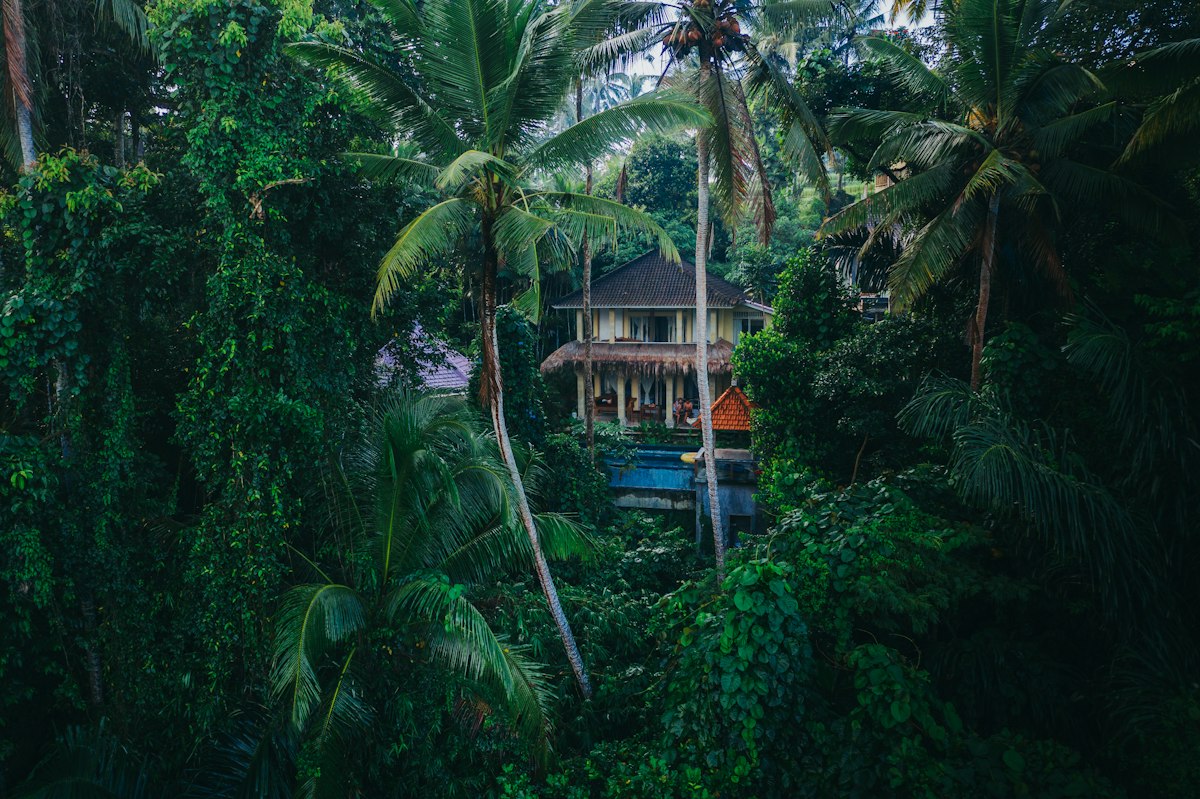
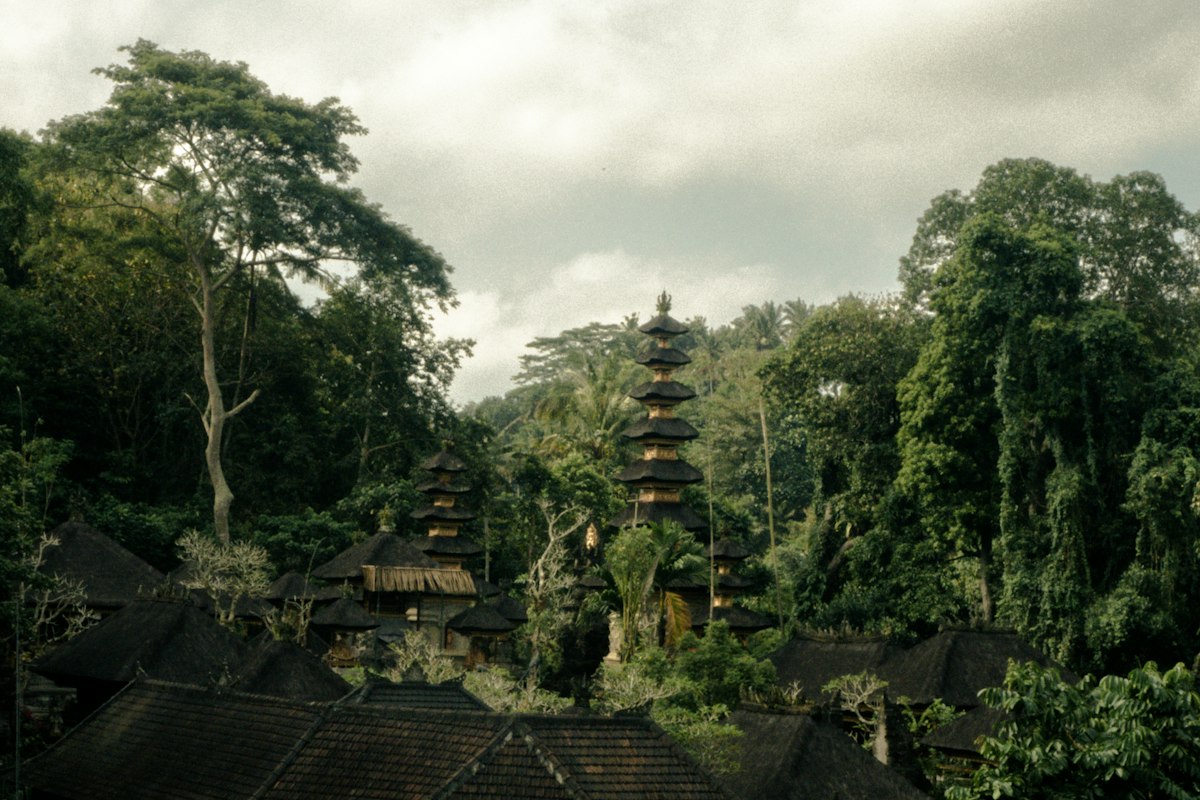
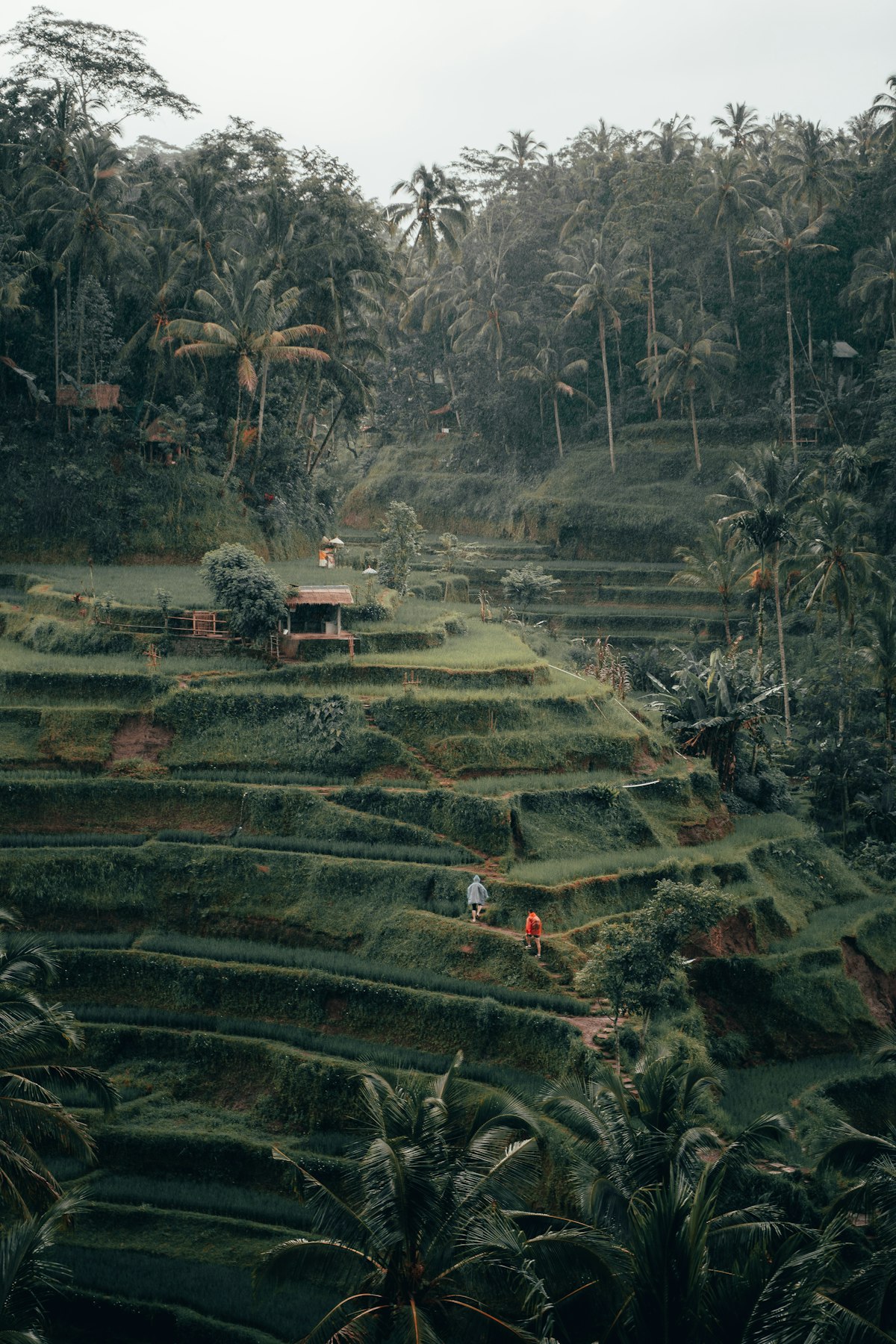
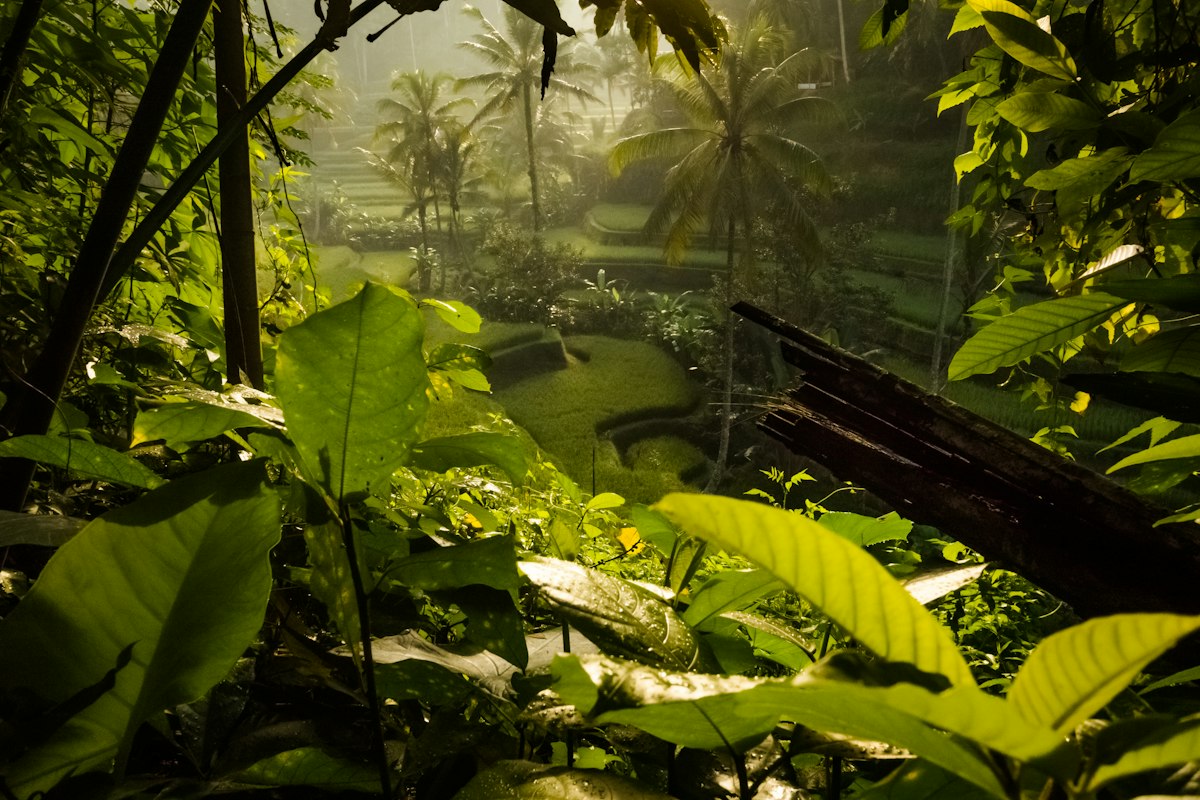
Bali Rainforest in Pictures
When to Go: Seasons in the Bali Rainforest
The dry season from April to October is the most popular window for a Bali rainforest stay: trails are firm, waterfalls still run strongly from the wet months, and the mornings are clear enough to reveal Mount Agung or Mount Batukaru from your veranda. The shoulder months of April, May, September, and October offer the best balance — good weather, thinner crowds, and lower rates than the July–August peak.
The green season from November to March is quieter, lusher, and cheaper, with the forest at its most vivid and waterfalls at full roar. The trade-off is heavy rain, slippery jungle paths, and the occasional road closure in the mountains, so pack proper footwear and build flexibility into your itinerary. Many eco-lodges run discounted rates and tree-planting programmes in this season, making it a rewarding choice for travellers who do not mind getting wet.
Whatever the season, the rainforest is warm and humid year-round, so pack light, breathable layers, a reef-safe insect repellent, grippy walking shoes, and a light rain shell. Mornings are often misty and cool in the highlands, so a light layer for sunrise on the terrace is a good idea.
Top Rainforest Regions in Bali
Ubud and the Keliki & Tegallalang valleys are the heart of Bali's eco-lodge scene, pairing accessible jungle, rice terraces, craft villages, and the island's best cafés and spas. Sidemen, beneath Mount Agung, is remote, traditional, and deeply rural — for travellers who want true quiet and a window into village life. Munduk and the north-Bali highlands are cooler, mistier, and dotted with coffee plantations, crater lakes, and waterfalls, while the foothills of Mount Batukaru offer the deepest forest and the most off-grid stays.
Choose Ubud for a first trip, Sidemen for a digitally disconnected retreat, Munduk for cool mountain cloud-forest, and Batukaru for serious off-grid immersion. Many visitors split a week between two regions — for example two nights in Munduk and four in Ubud — to experience the island's range of rainforest landscapes in a single trip.
Getting to Bali: Flights to the Rainforest
All Bali flights arrive at Ngurah Rai International (DPS) near Denpasar, and the eco-lodge heartlands of Ubud, Tegallalang, and Sidemen are around a 90-minute transfer north of the airport. Munduk and the Batukaru foothills are a scenic 2.5-hour drive. The dry-season months are the busiest for fares, so booking into the shoulder months of April, May, September, and October often secures the best combination of price and weather.
Airlines serving Bali include Garuda Indonesia, Singapore Airlines, Qantas, Emirates, KLM, AirAsia, and a growing roster of low-cost carriers from across Asia, Australia, and the Middle East. Many eco-lodges can arrange a private airport transfer, which is the easiest way to reach a remote rainforest property without navigating Bali's roads on arrival.
Book Your Bali Rainforest Stay
Whether you want a luxury tented camp or an off-grid bamboo bungalow, browse and book Bali's best eco-lodges and hotels in one place. Book early — the most loved rainforest properties are small and sell out far ahead of peak season.
Book Bali Eco-Lodges & HotelsGetting Around Bali: Cars & Scooters
A rental car with a driver is the most comfortable way to reach remote rainforest lodges, while a scooter is ideal for short hops between rice terraces and waterfalls once you are settled. Book online ahead of time to skip the airport queues.
Stay Connected with a Bali eSIM
Rainforest valleys can have patchy Wi-Fi, and many eco-lodges intentionally embrace disconnection. A Bali eSIM on your phone gives you a strong 4G/5G backup for maps, translation, and your transfer — all set up before you land.
Get a Bali eSIMRent a Bike in Bali
Cycling through the Tegallalang rice terraces or along the forest roads of Munduk is a Bali joy. Pack grippy shoes, a light layer against the jungle humidity, and book a bike online to skip the rental-shop queues.
Rent a BikeThings to Do from Your Bali Rainforest Lodge
The rainforest is not just a backdrop — it is your playground. Chase waterfalls in the morning, walk the Tegallalang rice terraces at golden hour, bathe in a hidden jungle pool, learn to cook with produce from the lodge garden, or take a sunrise hike on Mount Batur. Many eco-lodges offer guided forest treks, village craft workshops, and volunteer conservation days that let you give back while you explore. Browse top-rated Bali tours and book the experiences that make your rainforest stay unforgettable.
Ubud: Jungle Swing, Waterfall & Rice Terrace Private TourFrequently Asked Questions
What is an eco-lodge in Bali?
A Bali eco-lodge is an accommodation designed to have minimal environmental impact while immersing you in the island's rainforest. Expect bamboo or reclaimed-timber construction, solar power, rainwater and spring-water systems, on-site organic gardens, composting toilets, and staffing from the local community. Luxury ranges from rustic off-grid bungalows to design-led tented camps, all sharing the goal of treading lightly on the land.
Where are the best eco-lodges in Bali?
The best rainforest eco-lodges cluster in and around Ubud and its Keliki and Tegallalang valleys, the Sidemen valley beneath Mount Agung, and the cooler cloud-forest hills of north Bali around Munduk. Each area offers a different character — Ubud balances Bali's cultural heart with accessible jungle, Sidemen is remote and rural, and Munduk is cool, misty, and mountainous.
How much does an eco-lodge in Bali cost?
Prices range widely. Simple off-grid bamboo bungalows in Sidemen start at around USD 40–80 per night, mid-range lodges with organic gardens and pools sit between USD 100–250, and luxury tented camps like Capella Ubud climb well above USD 700 a night. Book early — the best properties are small and often run by families, so they sell out far ahead of peak season.
Is it safe to stay in a rainforest lodge in Bali?
Yes. Established eco-lodges have proper sanitation, mosquito management, screened sleeping areas, and trained local staff who know the terrain. The main hazards are mosquitoes (bring reef-safe repellent), slippery jungle paths after rain (wear grippy shoes), and remoteness (keep an offline map and a loaded eSIM handy). Most lodges can arrange airport transfers and know the safest routes.
Do Bali eco-lodges have Wi-Fi and hot water?
Most established eco-lodges offer hot water and some form of Wi-Fi, though bandwidth in rainforest valleys can be limited. Several intentionally embrace disconnection — confirm before you book if you need reliable internet for work. A Bali eSIM gives you a strong 4G/5G backup on your phone in case the lodge's line is slow.
When is the best time to stay in a Bali rainforest eco-lodge?
The dry season from April to October is the most popular: trails are firm, waterfalls are still flowing, and mornings are clear for mountain views. The shoulder months of April, May, September, and October offer the best balance of good weather, fewer crowds, and lower rates. The green season from November to March is lush and quiet, but expect heavy rain and occasional slippery trails.
Final Tips for a Bali Rainforest Eco-Lodge Trip
A Bali rainforest eco-lodge trip is one of the most rewarding ways to experience the island, but a little preparation goes a long way. Choose your region by the experience you want — Ubud for culture and comfort, Sidemen for true quiet, Munduk for cool mountains, and Batukaru for off-grid immersion. Pack light, breathable layers, reef-safe insect repellent, grippy walking shoes, and a light rain shell. Confirm whether your lodge has reliable Wi-Fi if you need it, and load a Bali eSIM as a backup for navigation.
Book your lodge, flights, and transfers in advance — the best properties are small, owner-run, and sell out far ahead of peak season — and approach the forest as a guest, not a tourist. Stay on the trails, respect the local subak water temples, and choose lodges and tours that put their money back into the community. Do that, and Bali's rainforest will give back far more than you take.
Plan Your Bali Rainforest Trip Today
Compare live flights to Bali, book your eco-lodge or hotel, arrange a rental car or bike, set up your eSIM, and reserve the tours that will make your rainforest trip unforgettable — all in one place.