A flight ticket to Melbourne costs from around $120 AUD return on a domestic flight from an Australian city, $500 USD return on a long-haul flight from Asia, $900 USD from the Middle East, and $1,200–$1,400 USD from Europe or North America. The exact price depends on where you fly from, the cabin, the season and how far ahead you book. In the cheapest months — May, August and October — fares sit at the floor of their range. In the December–January festive and Australian-summer peak, the same ticket can nearly double.
This guide is a full breakdown of the cost to fly to Melbourne. We cover the fare by origin (domestic, New Zealand, Asia, the Middle East, Europe, North America), the fare by cabin (Economy, Premium Economy, Business, First), the fare by season (low, shoulder, peak), the cheapest months and the peaks to avoid, how far ahead to book, and how airline miles can cut the cost. We also cover everything else you need to book the trip: a Melbourne hotel in the right part of the city, a car or bike for getting around, an Australia eSIM so you have data the moment you land, and top-rated Melbourne tours and experiences to book in advance.
Melbourne Fare by Origin
The cost of a flight to Melbourne depends most on where you fly from. These are the typical return fares from the main origins, so you can see the spread from a short domestic hop to a long-haul intercontinental flight.
Sydney to Melbourne return
Around AUD $120 – $300 returnThe cheapest flight to Melbourne is from Sydney, one of the busiest domestic routes in the world. A Sydney to Melbourne return Economy ticket costs around $120–$300 AUD, with budget carriers like Jetstar and Rex offering fares from around $120 in the cheaper months and the full-service carriers (Qantas, Virgin) from around $180. The flight takes about an hour and a half, and the fare includes a carry-on bag on the budget carriers and a checked bag on the full-service carriers.
Brisbane, Adelaide, Gold Coast to Melbourne return
Around AUD $150 – $380 returnFrom Brisbane, Adelaide and the Gold Coast a return Economy ticket to Melbourne costs around $150–$380 AUD. The budget carriers keep the floor low in the off-peak months, and the full-service carriers offer a more complete package at a moderate premium. Flight times are between two and two and a half hours from these east-coast cities.
Perth to Melbourne return
Around AUD $300 – $600 returnFrom Perth a return Economy ticket to Melbourne costs around $300–$600 AUD. The cross-country flight takes around three and a half to four hours, and both budget and full-service carriers serve the route. Book ahead for the best price, especially in the school-holiday peaks.
Auckland to Melbourne return
Around NZD $450 – $900 returnFrom Auckland a return Economy ticket to Melbourne costs around $450–$900 NZD on the direct Air New Zealand, Qantas or Jetstar service. The flight takes about three and a half hours, and the fare includes a carry-on bag on the budget carriers. This is the cheapest international entry point to Melbourne.
Singapore, Kuala Lumpur, Bangkok to Melbourne return
Around USD $500 – $1,000 returnFrom Singapore, Kuala Lumpur or Bangkok a return Economy ticket to Melbourne costs around $500–$1,000 USD on a direct or one-stop service. The flight time is around seven to eight hours direct, and the fare is one of the best-value long-haul entry points to Melbourne from Asia.
Dubai to Melbourne return
Around USD $900 – $2,000+ returnFrom Dubai a return Economy ticket to Melbourne costs around $900–$2,000+ USD on the direct Emirates A380 service, depending on the season. The flight takes around thirteen hours forty minutes direct. Business is around $4,000–$7,000 return and First around $7,000–$10,000. See our full Dubai to Melbourne fare guide for the detail.
London, Europe to Melbourne return
Around USD $1,200 – $2,500+ returnFrom London and Europe a return Economy ticket to Melbourne costs around $1,200–$2,500+ USD, usually on a one-stop service via Singapore, Dubai, Doha or Kuala Lumpur. The total travel time is around twenty-two to twenty-five hours. The fare moves sharply with the European summer and the December festive peak.
USA, Canada to Melbourne return
Around USD $1,300 – $2,800+ returnFrom the USA and Canada a return Economy ticket to Melbourne costs around $1,300–$2,800+ USD, usually on a direct or one-stop service via Los Angeles, San Francisco, Dallas, Vancouver or Honolulu. The flight time is around fifteen to seventeen hours direct from the west coast. The fare is highest in the North American summer and the December peak.
Melbourne Fare by Cabin
The fare to Melbourne also depends on the cabin. These are the typical return fares by cabin, from a domestic Economy hop to a long-haul First Class suite, so you can see the relative cost of each cabin on the route.
Economy return to Melbourne
From around $120 AUD domestic · $500 USD long-haulEconomy is the cheapest way to fly to Melbourne. A domestic Economy return from an Australian city starts at around $120–$300 AUD, and a long-haul Economy return from Asia starts at around $500 USD, from the Middle East around $900 USD and from Europe or North America around $1,200–$1,400 USD. The fare includes a carry-on bag and meals on the full-service carriers.
Premium Economy return to Melbourne
Around 1.5x–2x the Economy farePremium Economy to Melbourne is usually priced at around one and a half to two times the Economy fare. It is offered on the long-haul international services (Emirates, Singapore Airlines, Qantas, Virgin Atlantic and others) with a wider seat, more recline, a footrest and an upgraded meal service — a good middle ground for a long overnight sector without the jump to Business.
Business Class return to Melbourne
Around USD $2,500 – $7,000 return long-haulBusiness Class to Melbourne costs around $2,500–$7,000 USD return on the long-haul international services, with a lie-flat seat, lounge access, premium dining and (on Emirates) a chauffeur-drive. Domestic Business within Australia is a different product — a wider recliner seat with lounge access and a full meal, priced at a premium to Economy.
First Class return to Melbourne
Around USD $7,000 – $10,000+ return long-haulFirst Class to Melbourne is the premium product on the long-haul international services and costs around $7,000–$10,000+ USD return. Emirates First on the A380 is the private-suite product with the onboard shower spa, and Qantas and Singapore Airlines offer their own enclosed-suite First products. Availability is limited and the fare reflects it.
Melbourne Fare by Season
The flight ticket price to Melbourne moves with the seasons. These are the typical fares in the low, shoulder and peak windows, so you can see the price difference and pick the cheapest time that fits your schedule.
Low season (May, August, October)
The cheapest time to fly to Melbourne is the low season — May, August and October — when domestic Economy fares can be found from around $120 AUD return and long-haul Economy from the floor of its range. May and August are mid-winter in Melbourne with lower leisure demand, and October is spring with fares still below the year average. This is the best-value window to fly to Melbourne.
Shoulder season (February, March, September, November)
Shoulder months offer fair value, with fares sitting between the low and the peak. February is good value once the festive peak has passed, March is pleasant late-summer weather, September is early spring, and November is late spring before the summer build-up. These months balance decent Melbourne weather and reasonable fares.
Peak season (December, January, Easter, school holidays)
The most expensive time to fly to Melbourne is the December–January festive and Australian-summer peak, plus the Easter break and the Australian school holidays. Domestic Economy fares can climb to $400–$600 AUD return and long-haul Economy to the top of its range. Book very early or travel just outside these peaks for a better price.
The Expensive Peaks to Avoid
If you want to keep the cost of flying to Melbourne down, avoid these peaks. They are the demand surges that drive fares to their highest — December and January most of all, plus Easter and the Australian school holidays.
December & January
The Christmas and New Year holidays plus the Australian summer school holidays push fares to their highest. Domestic Economy can climb to $400–$600 AUD return and long-haul to the top of its range, nearly double the August low.
Easter & school holidays
The Easter long weekend and the Australian school-holiday breaks (April, July, September/October) push fares up. October is the cheapest of these, April and July are the highest.
Australian Open (late January)
The Australian Open tennis in late January adds leisure demand to the festive peak, keeping fares high into the first weeks of the year.
Major events & long weekends
The Melbourne Cup, AFL Grand Final weekend and other major events create short fare spikes around the event dates. Travel just outside these weekends for a better price.
How to Get the Cheapest Flight to Melbourne
- A flight ticket to Melbourne costs from around $120 AUD return domestic, $500 USD long-haul from Asia, $900 USD from the Middle East, and $1,200–$1,400 USD from Europe or North America
- The cheapest time to fly to Melbourne is May, August or October, when fares sit at the floor of their range
- December and January are the most expensive months — fares can nearly double the August low
- For domestic flights, the budget carriers (Jetstar, Rex) keep the floor low; the full-service carriers (Qantas, Virgin) include a checked bag and a fuller service
- For long-haul flights, a one-stop service is usually cheaper than a direct — but the direct saves several hours
- Book three to six weeks ahead for domestic and six to eight weeks ahead for long-haul, and ten to twelve weeks ahead for the December–January peak
- Flying midweek (Tuesday, Wednesday, Thursday) is usually cheaper than Friday and Sunday on both domestic and long-haul routes
- Airline loyalty programmes (Qantas Frequent Flyer, Emirates Skywards, Singapore Airlines KrisFlyer) allow mileage redemptions to Melbourne — a strong-value redemption on a long-haul route
- Melbourne has two airports — Tullamarine (MEL) for domestic and international, and Avalon (AVV) for a smaller selection of domestic budget flights; compare both for the cheapest fare
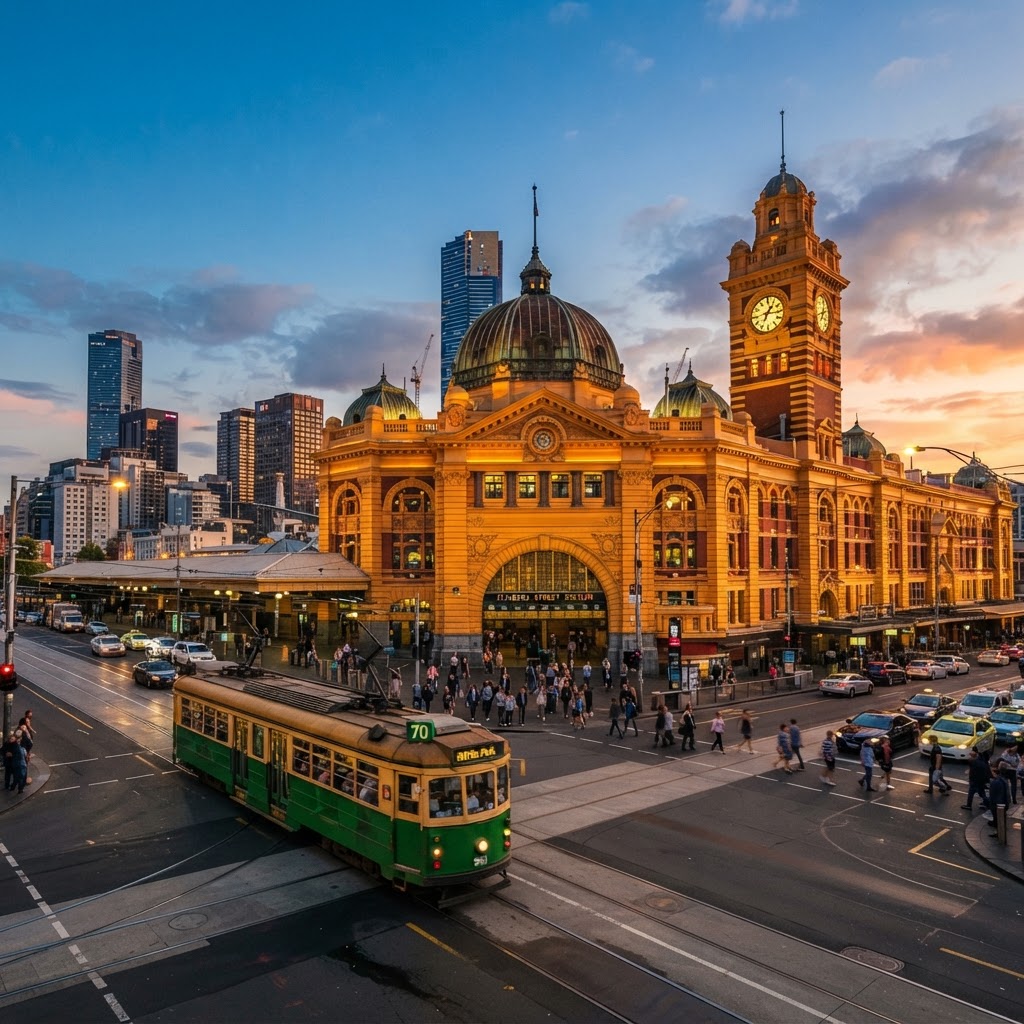
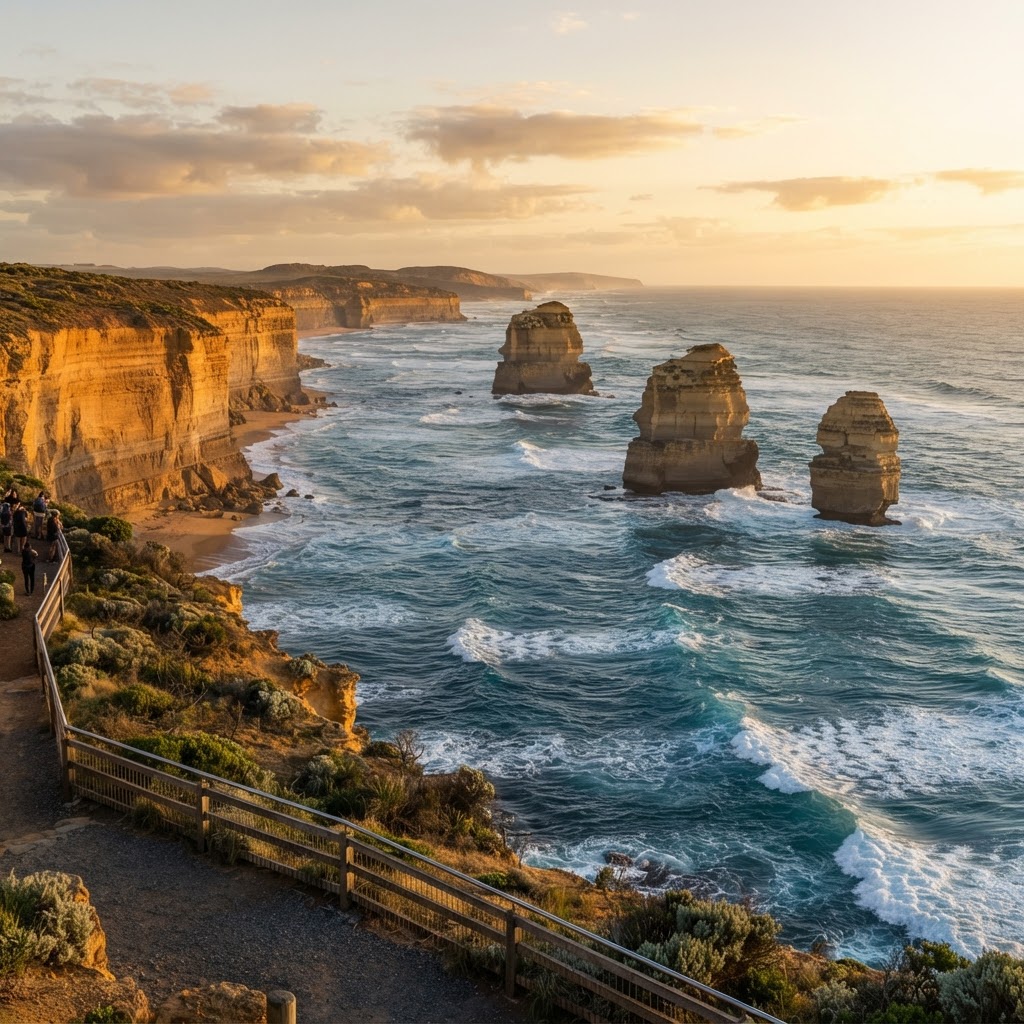
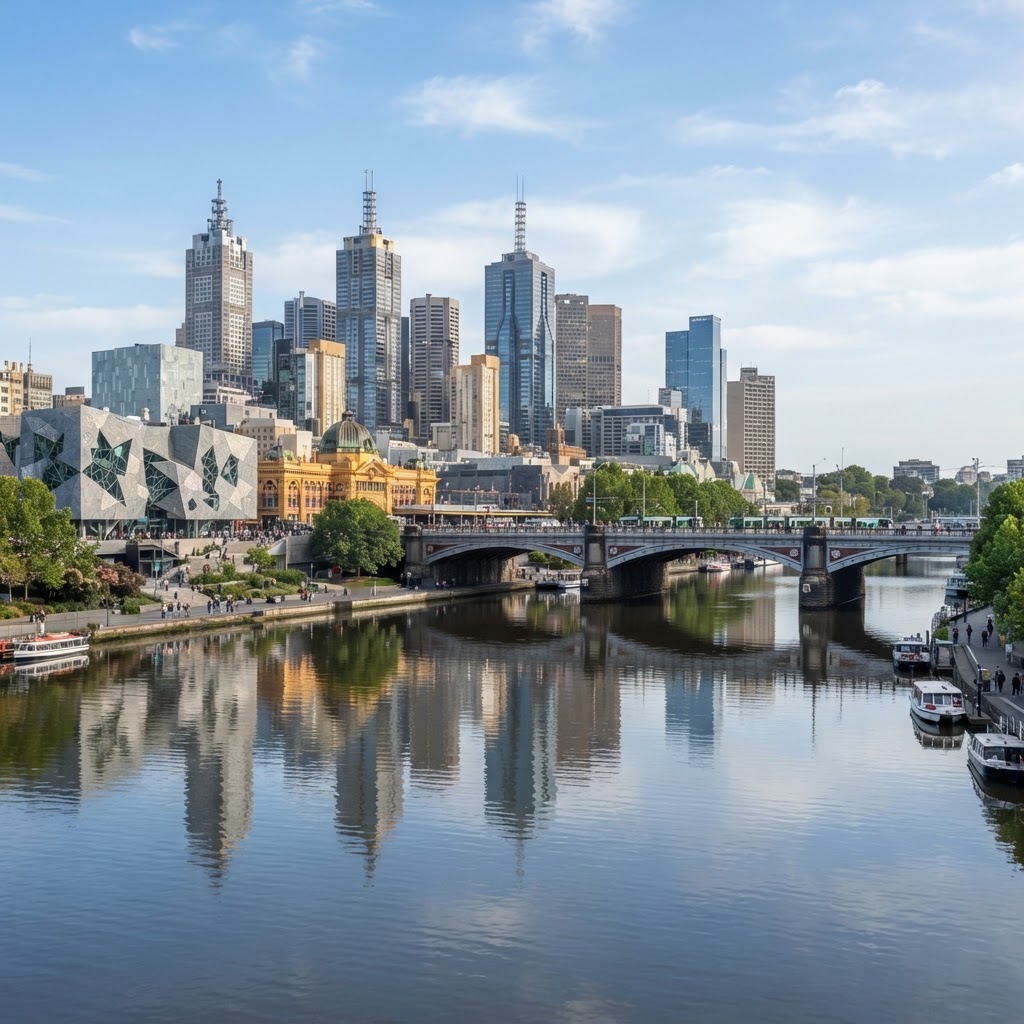
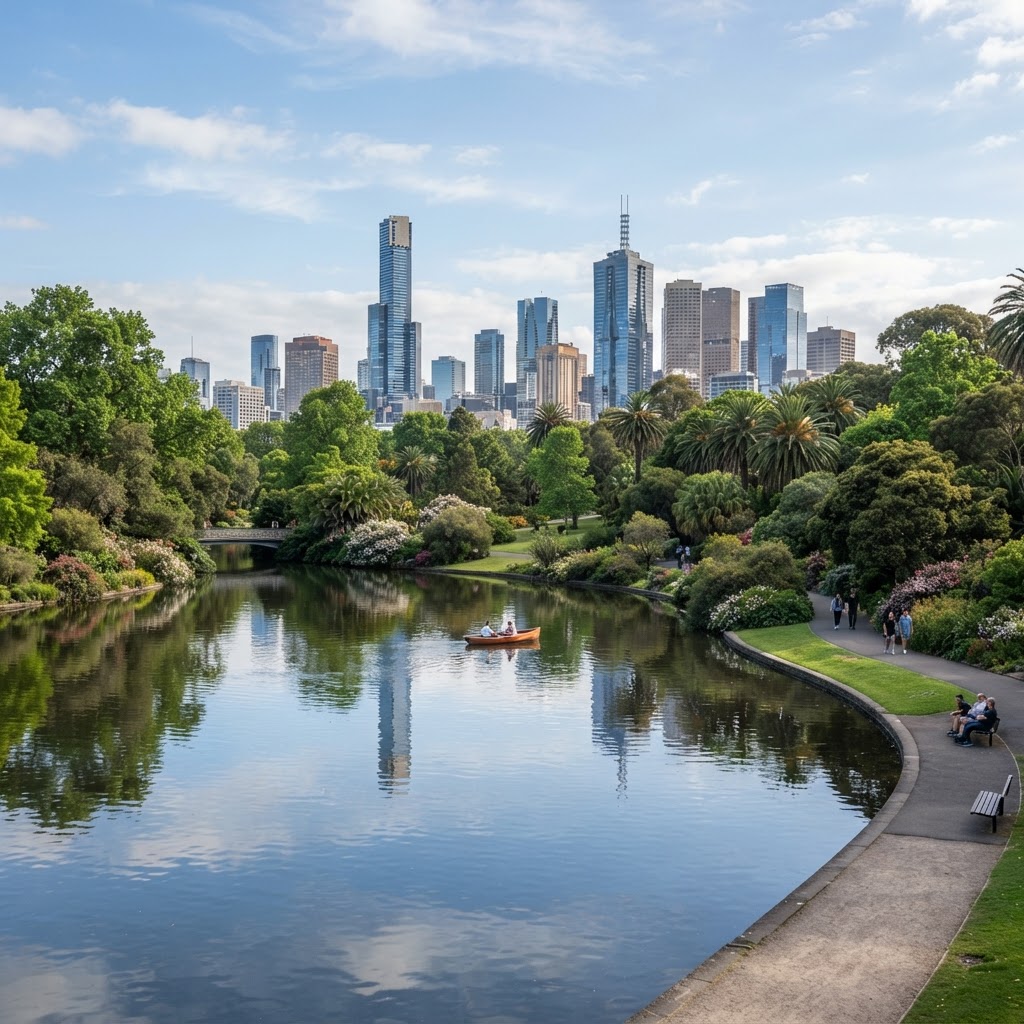
Melbourne in Pictures
A preview of what waits at the end of your flight to Melbourne — from Flinders Street Station and the laneways to the Great Ocean Road, the Yarra River, the Royal Botanic Gardens and Queen Victoria Market.


Flights to Melbourne
Compare live fares to Melbourne from your origin on your dates, with flexible-month search and a price alert so you book at the cheapest point of the year.
Melbourne Hotels
Book CBD hotels near Flinders Street, design stays in the laneways, boutique hotels in Southbank and Fitzroy, and family hotels near the MCG — close to the sights you flew all the way to Melbourne to see.
Book Melbourne HotelsCar Rental in Melbourne
Pick up a car at Melbourne Airport (MEL) on arrival — the easiest way to explore the city, the Great Ocean Road, the Yarra Valley wine region and a drive along the coast at your own pace.
Australia eSIM
Install an Australia eSIM before you fly so you have data, maps and ride-hailing the moment you land at Tullamarine — no airport SIM queue and no roaming charges on the way to your hotel.
Get an Australia eSIMRent a Bike in Melbourne
Melbourne's Capital City Trail and the Yarra River loop are a great way to see the city at a slow, green pace. Book a bike rental ahead and ride the river, the gardens and the bayside at your own pace.
Rent a BikeMelbourne Tours & Experiences
Land at Tullamarine after your flight to Melbourne and a pre-booked airport transfer takes the stress out of the first hour — then book a Great Ocean Road day trip, a Yarra Valley wine tour, a laneways food walk, a Phillip Island penguin tour, a MCG sports tour, or a city highlights tour to make the most of your Melbourne trip. Browse and book top-rated Melbourne experiences below, all with free cancellation.
Melbourne: Great Ocean Road Small Group Eco TourFrequently Asked Questions
How much is a flight ticket to Melbourne?
A flight ticket to Melbourne costs from around $120 AUD return on a domestic flight from an Australian city, $500 USD return on a long-haul flight from Asia, $900 USD from the Middle East, and $1,200–$1,400 USD from Europe or North America. The exact price depends on where you fly from, the cabin, the season and how far ahead you book. Business Class is around $2,500–$7,000 USD return long-haul, and First Class around $7,000–$10,000+.
What is the cheapest flight to Melbourne?
The cheapest flight to Melbourne is a domestic Economy return from Sydney, which can be found from around $120 AUD on a budget carrier in the cheaper months. From overseas, the cheapest long-haul entry point is usually from Singapore, Kuala Lumpur or Bangkok, with Economy return fares from around $500 USD. Book ahead, fly midweek and travel in May, August or October for the lowest fare.
How much is a flight from Sydney to Melbourne?
A flight from Sydney to Melbourne costs around $120–$300 AUD return in Economy on the budget carriers (Jetstar, Rex) or the full-service carriers (Qantas, Virgin). It is one of the busiest domestic routes in the world, with dozens of flights a day, and the flight takes about an hour and a half. Book three to four weeks ahead for the best price.
How much is a Business Class ticket to Melbourne?
Business Class to Melbourne costs around $2,500–$7,000 USD return on the long-haul international services, with a lie-flat seat, lounge access, premium dining and (on Emirates) a chauffeur-drive. Domestic Business within Australia is a wider recliner seat with lounge access and a full meal, priced at a premium to Economy. Business fares are lower in the shoulder months and highest over the December–January peak.
What is the cheapest month to fly to Melbourne?
The cheapest months to fly to Melbourne are May, August and October. May and August are mid-winter in Melbourne with lower leisure demand, and October is spring with fares still below the year average. December and January are the most expensive months, driven by the Christmas and New Year holidays and the Australian summer school holidays. Fares can nearly double the August low in the peak.
How far ahead should I book a flight to Melbourne?
Book three to six weeks ahead for a domestic flight to Melbourne and six to eight weeks ahead for a long-haul flight, and ten to twelve weeks ahead if you are travelling in the December–January festive peak. For the cheapest months (May, August, October) booking three to four weeks ahead is usually enough, but set a price alert because fares move through the year.
Which airport should I fly into for Melbourne?
Melbourne has two airports. Tullamarine (MEL) is the main airport, handling all international flights and most domestic flights, and is the closest to the city. Avalon (AVV) is a smaller airport southwest of the city, handling a smaller selection of domestic budget flights. Compare both for the cheapest fare, but factor in the extra ground time and cost to reach the city from Avalon.
Is a one-stop flight to Melbourne cheaper than a direct?
A one-stop flight to Melbourne is usually cheaper than a direct on the long-haul routes, especially from Europe and North America. The trade-off is travel time — a one-stop adds several hours to the journey. From Asia, a direct is often available and competitively priced. For the cheapest fare, compare both; for the fastest trip, take the direct.
Plan Your Melbourne Trip
Once you have picked your cabin and the cheapest month that fits your schedule (May, August or October for the lowest fares), the rest is one batch of bookings: your flight to Melbourne, a hotel in the right part of the city, a car or bike for the days you want to explore, an Australia eSIM and any tours and an airport transfer you want to lock in ahead. Start planning below.