Rome is the only city in the world where a morning coffee is served beside a 2,000-year-old temple, where the commute passes a triumphal arch, and where dinner in a family trattoria can sit a few streets from a Bernini fountain. Three thousand years of history are stacked on top of each other here — republican ruins, imperial palaces, baroque piazzas, and a modern Italian city that lives happily among all of it.
This Rome travel guide ranks the best places to visit in Rome, explains how to see the Colosseum and the Vatican without losing a day to queues, and covers the practical side of the trip: the best time to visit Rome, where to stay, how to get around, and how to book flights to Rome, a hotel in the right neighbourhood, a car rental for day trips, an Italy eSIM, a rental bike and the Rome tours worth reserving before you fly.
Why Rome Belongs on Every Travel List
Nowhere else combines this much ancient history, this much art and this much everyday life in one walkable centre. Rome works as a first European city break, a honeymoon, a family trip and a slow month of pasta and churches — and it is remarkably cheap for a capital of its stature.
Ancient and Baroque in One Walk
The Colosseum, the Forum, the Pantheon, Piazza Navona and the Trevi Fountain sit within a few kilometres of each other, so a single morning on foot crosses two thousand years of architecture.
The Vatican and the Greatest Art
The Vatican Museums hold the Sistine Chapel, Raphael's rooms and the world's finest collection of classical sculpture, with St Peter's Basilica next door — the highest concentration of art anywhere in Europe.
Food Worth Planning Around
Cacio e pepe, carbonara, pizza al taglio, carciofi alla giudia and a scoop of pistachio gelato: Roman cooking is simple, seasonal and best eaten in the neighbourhoods where it was invented.
A City That Feels Like a Village
Rome is a patchwork of neighbourhoods — Monti, Trastevere, Testaccio, Prati — each with its own market, church and evening passeggiata, which makes even a short stay feel local.
Long, Warm Seasons
Spring and autumn are glorious, summer is hot but full of life, and winter is mild, quiet and cheap. Rome is a genuine year-round destination rather than a seasonal one.
The Perfect Base for Italy
Florence is 90 minutes away by high-speed train, Naples and Pompeii about an hour, and the coast at Ostia half an hour by metro — Rome is the natural hub for a wider Italian trip.
The Best Places to Visit in Rome
These eight places are the backbone of any Rome itinerary — the arenas, basilicas, fountains and neighbourhoods that define the city, each with the practical detail that makes the difference between a rushed photo stop and a great day out.
The Colosseum, Roman Forum & Palatine Hill
Ancient Rome's Greatest Arena
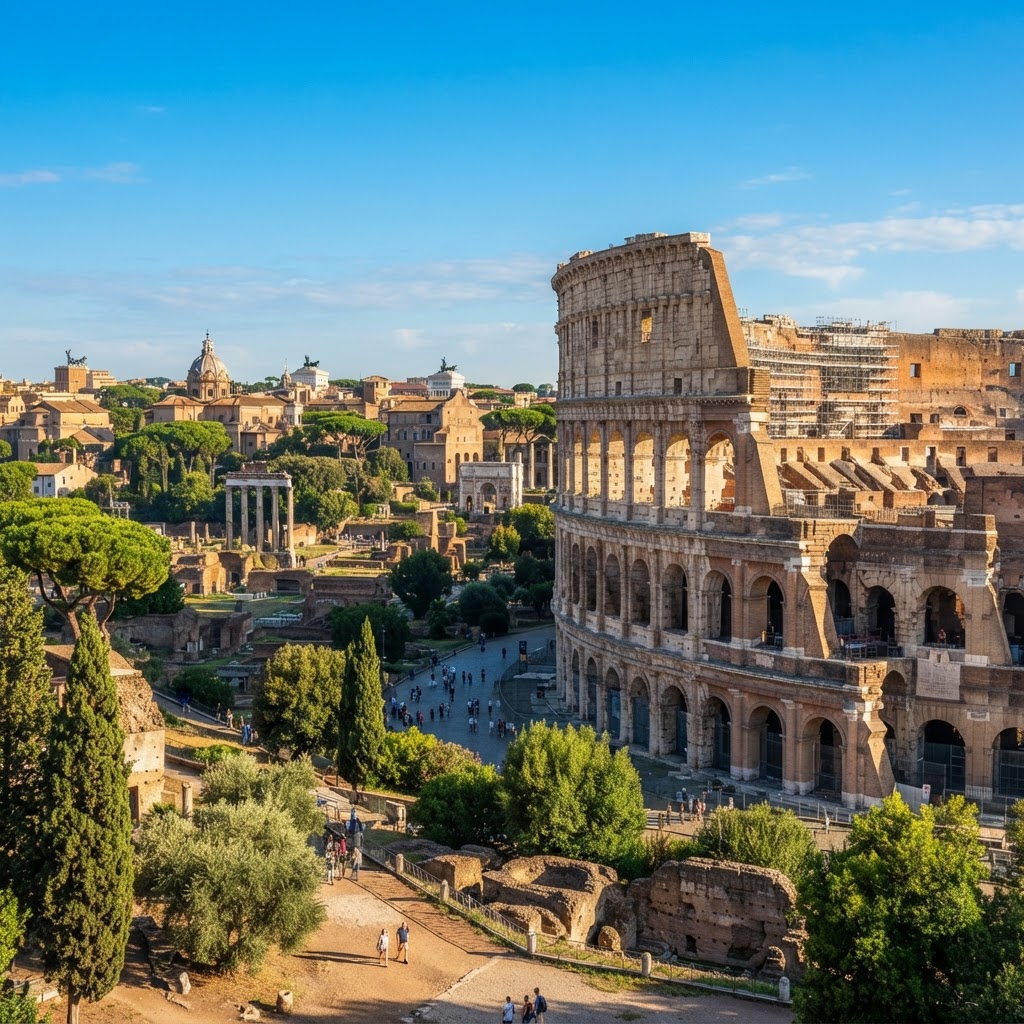
Start here. The Colosseum held 50,000 spectators for gladiatorial games, and its underground hypogeum — where animals and fighters waited — is now open on the arena-floor and underground tours. Book a combined ticket with the Roman Forum and Palatine Hill, which is the same entrance, and go at opening time: the site is shadeless by midday. Allow four hours in total, and take the Palatine first for the view over the Forum before the heat and the crowds arrive.
Vatican Museums, Sistine Chapel & St Peter's Basilica
The Art Pilgrimage
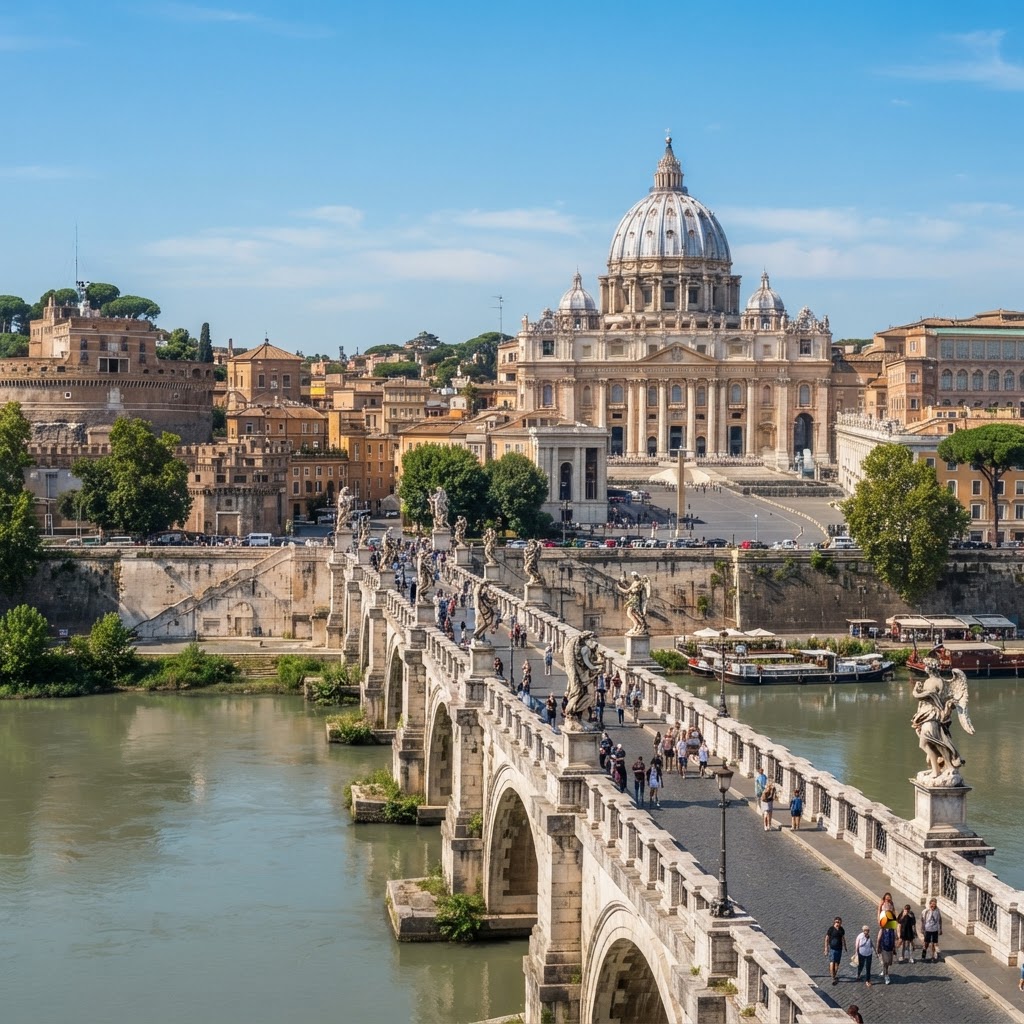
The Vatican is a half-day minimum and a full day if you love art. Book a timed entry or an early-morning guided tour, take the short cut through the Cortile Ottagono, and give the Sistine Chapel a slow 20 minutes at the end of the sculpture galleries. St Peter's Basilica next door is free to enter but has its own security queue — the dome climb (551 steps, lift to the roof) is the best view in Rome. Dress code applies: shoulders and knees covered for everyone.
The Pantheon
The Best-Preserved Temple in Rome
Two thousand years old, still standing as built, and still the largest unreinforced concrete dome in the world. The oculus at the top is open to the sky, rain included, and the light inside shifts all day. Entry now needs a timed ticket, so book it for late morning and pair the visit with a coffee at Tazza d'Oro or Sant'Eustachio a few streets away.
Trevi Fountain & the Baroque Fountains
Coins, Water & Theatre
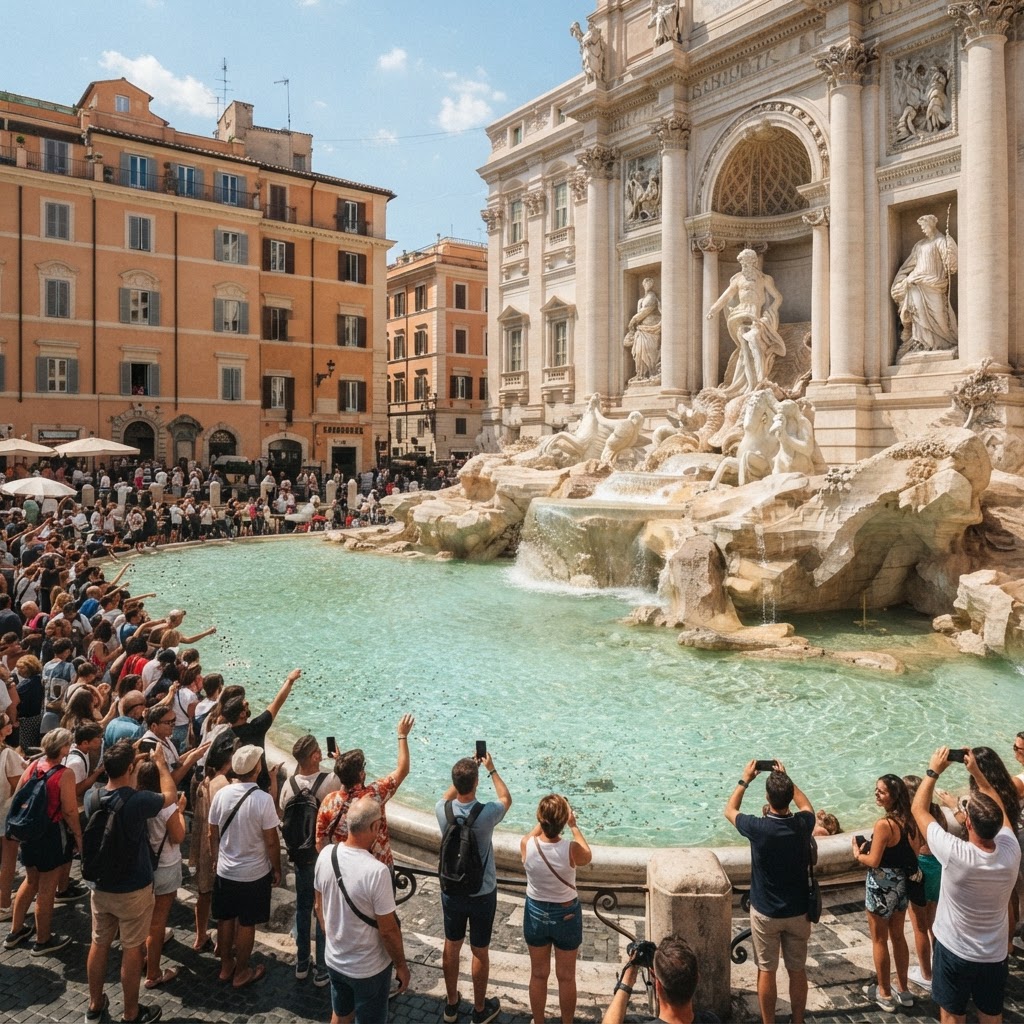
The Trevi is at its best before 8am, when the basin is nearly empty and the travertine glows. Toss the coin over your left shoulder with your right hand, then walk the baroque circuit: the Quattro Fontane, the Triton and Bee fountains, and Bernini's Four Rivers Fountain in Piazza Navona. Come back to the Trevi after dark, when the whole fountain is lit and the theatre of the crowd is half the experience.
Piazza Navona & Campo de' Fiori
Squares & Market Life
Piazza Navona is built on the footprint of Domitian's stadium and is Rome's most beautiful square, with three fountains, street artists and café terraces that charge for the view. Ten minutes away, Campo de' Fiori is a working food market in the morning and a bar scene at night — the best place to buy fruit, cheese, spices and a picnic lunch before a long afternoon of walking.
The Spanish Steps & Via dei Condotti
Postcard Views & Shopping
The Spanish Steps climb from Piazza di Spagna to the French church of Trinità dei Monti, and the view back down over the rooftops is one of the classic photographs of Rome. Sitting on the steps is no longer allowed, but the fountain of the Barcaccia and the surrounding streets of Via dei Condotti, Via del Babuino and Via Margutta are perfect for an hour of window shopping, galleries and coffee.
Trastevere
Dinner Across the River
Trastevere is the Rome of ivy-covered facades, narrow lanes, laundry lines and long dinners — and the single best neighbourhood to spend an evening. Cross the Ponte Sisto, wander to Santa Maria in Trastevere, then eat at a trattoria away from the main squares. Book dinner for 8pm or later like the locals, and finish with gelato at Otaleg or a drink in Piazza San Calisto.
The Borghese Gallery & Gardens
Bernini, Caravaggio & Green Space
The Borghese Gallery holds Bernini's Apollo and Daphne and Caravaggio's David with the Head of Goliath in a villa of twenty rooms — a perfect museum because it is small, timed-entry and impossible to get lost in. Book the exact slot weeks ahead, then rent a rowboat or a bike in the Villa Borghese gardens, walk the Pincio terrace for the sunset view over Piazza del Popolo, and finish with an aperitivo in the Flaminio district.
When to Visit Rome
April to June and September to October are the best months: warm days in the low 20s, long light, café terraces full and the city at its most comfortable for walking. May and late September are the sweet spot. July and August are hot — 32°C and above with little shade at the ruins — so if you travel then, do the ancient sites first thing in the morning and the museums in the afternoon heat.
Winter is underrated: November to February is quiet, cheap and mild enough for a coat and a coffee outdoors, with shorter queues at the Vatican and the Colosseum and Christmas lights and presepi (nativity scenes) across the churches in December. Book flights and hotels three to four months ahead for spring and autumn, when Rome fills up fastest.
Getting Around Rome
Central Rome is a walking city. The Pantheon to Piazza Navona is five minutes, the Forum to the Colosseum is five more, and the whole historic centre fits inside a 40-minute radius on foot — which is why you should keep your plans grouped by neighbourhood rather than crossing the city twice a day. Two metro lines (A and B) plus trams and buses cover the rest, and a single ticket or a multi-day pass works on all of them. Validate tickets and remember that driving into the historic centre triggers the ZTL camera zone and a fine.
From the airports, the Leonardo Express runs from Fiumicino to Termini in 32 minutes, and regional trains and coaches connect Ciampino. For getting around the region — Tivoli, Ostia Antica, Orvieto — trains are easy; a rental car only makes sense for the countryside of Lazio, Umbria or Tuscany, and should be collected on the day you leave the city.
Flights to Rome
Rome has two airports: Fiumicino (FCO) for almost all international and long-haul arrivals, and Ciampino (CIA) for many low-cost European routes. Fiumicino is 30 minutes from Termini by the Leonardo Express, Ciampino is served by shuttle buses to Termini in about 40 minutes. Direct flights to Rome operate from London, Dubai, Doha, Abu Dhabi, New York, Singapore, Sydney, Melbourne and most European and Asian hubs, with ITA Airways, Emirates, Qatar Airways, British Airways, easyJet, Ryanair and Wizz competing on price.
The cheapest fares to Rome usually appear on Tuesdays and Wednesdays, and shoulder-season departures in late April, early June, late September and October are consistently the best value. Compare live fares for your dates below, then line your arrival up with hotel check-in and your first Colosseum or Vatican time slot.
Where to Stay in Rome
For a first visit, stay in the Centro Storico around Piazza Navona and the Pantheon, or in Prati next to the Vatican: both put the headline sights within walking distance. Monti, tucked between the Forum and Termini, is the most charming choice for a short break, Trastevere is for evenings and food, and Testaccio is where Romans go out. Termini and the Esquilino side are the best value for transport links, five minutes from a mainline station and two metro lines.
Book a hotel within a few streets of a metro stop or a major bus route, and reserve early for spring and autumn — the small boutique hotels near the Pantheon and in Monti sell out first.
Find Rome Hotels
Compare hotels, apartments and boutique stays across the city, with free cancellation on most rooms and filters for neighbourhood, price and rating.
Book Rome HotelsCar Hire for Day Trips from Rome
A rental car is not worth having inside Rome — the traffic, the ZTL camera zones and the parking make the metro and your feet faster every time. Where a car earns its place is the day trips: Tivoli and Hadrian's Villa, Ostia Antica, the Castelli Romani wine country, Orvieto, and the motorway run up to Umbria and Tuscany. Collect it on the morning you leave the city.
Stay Connected with an Italy eSIM
Install an Italy eSIM before you fly and you land with Google Maps, train tickets, museum reservations and translation apps already working. No roaming charges, no hunting for a SIM shop at the airport, and your normal number stays active for calls.
Get an Italy eSIMRent a Bike in Rome
A bike is the quickest way to cover a lot of ground without queueing for buses or walking the same street twice. Rent one for a morning, ride the quietest lanes and riverside paths, and use it to link the sights that sit just outside the historic centre.
Rent a BikeThings to Do in Rome: Tours Worth Booking
The best Rome experiences are the ones that solve a queue: a Colosseum underground or arena-floor entry, a Vatican Museums tour that skips the general line and puts the Sistine Chapel in context, a Borghese Gallery slot that is otherwise impossible to find, or an evening food walk through Testaccio. Rome's headline sites use timed entry and sell out in spring, summer and the Christmas season, so reserve these before you fly.
Rome: Colosseum, Roman Forum and Palatine Hill skip-the-line entryPractical Tips for Your Rome Trip
When to visit Rome
April to June and September to October are the best months for walking and sightseeing, with warm days and thinner crowds than midsummer. Winter is quiet, mild and cheap, and December adds Christmas lights and nativity scenes across the churches.
How many days you need
Four full days is the realistic minimum: one for ancient Rome, one for the Vatican and St Peter's, one for the Pantheon, Navona and the Trevi, and one for Trastevere, the Borghese Gallery and the Pincio sunset. Five or six days lets you add a day trip to Tivoli or Ostia Antica and slow down in the evenings.
Book the Colosseum and Vatican ahead
Both use timed entry, both sell out in peak season, and both turn a two-hour queue into a five-minute scan. Book skip-the-line tickets or a guided tour two to six weeks ahead and build each day around that fixed entry time.
Group your days by neighbourhood
Rome rewards walking and punishes backtracking. Pair the Forum and Colosseum with Monti, the Vatican with Prati and Castel Sant'Angelo, the Pantheon with Navona and Campo de' Fiori, and Trastevere with the Gianicolo at sunset — and you will see more with far less time on buses.
Practical details worth knowing
Shoulders and knees must be covered to enter churches, including St Peter's — carry a light scarf in summer. The nasoni street fountains run drinkable water all over the city, so bring a bottle. Many museums close on Mondays, and the Vatican Museums are closed on Sundays except the last Sunday of the month.
Staying and eating like a local
Eat where the menu is short and in Italian, drink coffee standing at the bar, and book dinner for 8pm or later. Avoid restaurants with photo menus next to the Trevi and Navona, and head instead for Testaccio, Monti or Trastevere for the same dishes at half the price.
Frequently Asked Questions
What are the best places to visit in Rome for first-timers?
Prioritise the Colosseum with the Roman Forum and Palatine Hill, the Vatican Museums with the Sistine Chapel and St Peter's Basilica, the Pantheon, the Trevi Fountain, Piazza Navona, the Spanish Steps, Trastevere and the Borghese Gallery. That covers the ancient city, the art, the squares and the neighbourhood life that define Rome in four or five days.
How many days do you need in Rome?
Four full days is enough to see the highlights properly, with one day each for ancient Rome, the Vatican, the baroque centre and the neighbourhoods. Five to six days allows a half-day at the Borghese Gallery, a sunset on the Gianicolo and a day trip to Tivoli, Ostia Antica or Orvieto.
When is the best time of year to visit Rome?
April to June and September to October are the best months, with mild temperatures, long daylight and manageable crowds. July and August are hot and busy, November to February is quiet, cheap and mild, and December brings Christmas lights and nativity scenes that make the city especially atmospheric.
Do you need to book Colosseum and Vatican tickets in advance?
Yes. Both use timed entry and the most popular slots sell out weeks ahead in spring, summer and around holidays. Official tickets are released on a rolling basis, so book as soon as your dates are fixed, or reserve a guided tour that includes entry and skip-the-line access.
Where should I stay in Rome for a first visit?
The Centro Storico around Piazza Navona and the Pantheon is the most convenient base, with Prati and the Vatican quarter a close second. Monti is quieter and more charming, Trastevere is best for food and evenings, and the Termini and Esquilino area offers the best value with fast metro and train links.
Do I need to rent a car in Rome?
No, not for the city: the historic centre is restricted to residents, parking is scarce and expensive, and the metro and buses are faster. A rental car is only useful for day trips into Lazio, Umbria or Tuscany — Tivoli, Ostia Antica, the Castelli Romani or Orvieto — and is best collected on the day you leave.
Final Tips for Visiting Rome
The secret to Rome is sequencing, not speed. Book the Colosseum and the Vatican for the two earliest slots of your trip, when the light is good and the crowds are thin, then keep every other day loose: one neighbourhood, one long lunch, one fountain or church you did not plan for. Rome rewards the traveller who sits down.
With flights to Rome booked for late spring or early autumn, a hotel in the Centro Storico, Prati or Monti, a car reserved for a Tivoli or Ostia day, an Italy eSIM activated before you land, a bike for the Appian Way and your Colosseum, Vatican and Borghese tickets locked in, all that is left is a first espresso at the bar and the walk to the Pantheon. Use the booking tools on this page to arrange the whole trip in one place.
Plan Your Rome Trip Today
Compare live flights to Rome, book a hotel in the neighbourhood that suits you, reserve a car for your day trips, set up an Italy eSIM and lock in skip-the-line entry to the Colosseum, the Vatican Museums and the Borghese Gallery — all in one place, before you fly.
Keep Exploring
Best Places to Visit in Florence
The Duomo, the Uffizi and the Oltrarno — 90 minutes from Rome by high-speed train.
Best Places to Visit in Naples
Pizza, Pompeii and the Amalfi Coast, an hour south of Rome.
St Peter's Basilica, Rome
Tickets, dome climb and visiting tips for the Vatican basilica.
Fontana di Trevi, Rome
When to visit the Trevi Fountain and how to see it without the crowds.