Flights to Fiji usually cost between US$480 and US$950 return from Australia and New Zealand, US$850 to US$1,500 from the US West Coast, and US$1,300 to US$2,200 from Europe or the Gulf.Everything else — the month you travel, how far ahead you book, which airline you pick and whether your fare includes a checked bag — moves the number inside that range, and often by more than the difference between carriers. Two passengers in the same economy cabin on the same July flight can easily pay US$600 and US$1,400 respectively, purely because one booked in April and the other booked three weeks out.
This page is the price side of the Fiji flight question. It lists average return fares from every major origin city into Nadi International (NAN), breaks the year down month by month so you can see exactly where your dates sit, and compares what Fiji Airways, Virgin Australia, Qantas, Jetstar, Air New Zealand and United actually charge once baggage and seat selection are counted. Then it covers the costs people forget — island transfers, domestic flights, excess baggage on the small aircraft — before lining up the rest of the trip: a resort or hotel around Nadi, Denarau or the Coral Coast, a rental car for the Queens Road drive, a Fiji eSIM so your phone works the moment you land, bike hire for the flat coastal roads, and the island tours worth booking before you fly. Check live fares, then use the tables here to judge whether what you are seeing is a good price.
Fiji Flight Prices at a Glance
Cheapest origins to Nadi
Auckland, Brisbane, Sydney
Typical economy return, Australia
US$480 – US$950
Typical economy return, New Zealand
US$430 – US$800
Typical economy return, US West Coast
US$850 – US$1,500
Typical economy return, Europe & Gulf
US$1,300 – US$2,200
Cheapest months
February, March, November
Most expensive months
July, August, December
Best booking window
3 to 5 months ahead
Main gateway airport
Nadi International (NAN)
Longest nonstop sector
Los Angeles, around 10h 30m
All fares on this page are indicative return economy prices for travel in the current booking cycle, including taxes but not baggage on low-cost carriers. They are a benchmark, not a quote — routes, schedules and prices change with the season and with how full each flight already is. Search live fares for your dates and compare the figure against the tables below.
Average Return Flight Prices to Fiji by City
The pattern is simple: distance and competition set the floor, and season sets the ceiling. Auckland and Brisbane lead because they are the shortest sectors into Nadi and carry the most operators, including low-cost services. Los Angeles and San Francisco are the cheapest long-haul gateways because Fiji Airways and United compete head to head on the Pacific crossing. From the Gulf and Europe there is no nonstop option, so every fare carries at least one connection, and the routing you choose matters more than the airline — a Los Angeles or Singapore stop generally prices below a single-carrier connection through Australia.
Flight Prices to Fiji by Month
Fiji's price calendar is driven almost entirely by Australian and New Zealand school holidays, not by the weather. July and August sit at the top because both countries break up at once and the dry season makes Fiji the obvious winter escape, while February and November are cheap because they fall in the quiet weeks between. The weather in the low season is not a problem for most travellers — February is hot and humid with short heavy downpours rather than settled rain, and diving conditions in November are among the best of the year. If you can travel in the first half of May or the last week of September, you get shoulder weather at close to low-season prices.
Which Airline Offers the Best Fiji Fare?
Fiji Airways
Widest network, usually the benchmark fareThe national carrier flies nonstop to Nadi from Los Angeles, San Francisco, Sydney, Melbourne, Brisbane, Auckland, Christchurch, Honolulu, Singapore, Tokyo and Vancouver. Fares include checked baggage, meals and entertainment, so its headline price is often better value than a cheaper-looking low-cost fare once bags are added. As the largest operator into Nadi, it sets the price floor on most routes and releases sale fares several times a year.
Virgin Australia
Strong on Australia–FijiVirgin Australia competes with Fiji Airways from Sydney, Melbourne and Brisbane, and its fares usually sit within a few tens of dollars of the national carrier's. Choice fares include baggage, while the cheapest Getaway fares do not — compare the bag-inclusive price rather than the headline number.
Qantas
Full service from Sydney and BrisbaneQantas flies nonstop from Sydney and Brisbane to Nadi with checked baggage and meals included. Fares are usually close to Fiji Airways, and the route is one of the better value uses of Qantas Points for Australian travellers. Connections through Sydney are available from most Australian and Asian cities.
Jetstar
Lowest base fare, extras add upJetstar operates budget services from Sydney, Melbourne and Brisbane to Nadi. Base fares can undercut the full-service carriers by 30 to 40 per cent, but checked baggage, seat selection and food all cost extra — a family of four typically adds US$200 to US$350 to the ticket price.
Air New Zealand
Auckland and ChristchurchAir New Zealand flies from Auckland and seasonally from Christchurch, and is often the cheapest option into Nadi from New Zealand when a sale is running. Its fares include a checked bag, and connections from North America and Asia via Auckland can price below a direct Fiji Airways routing.
United Airlines
US West Coast alternativeUnited operates between San Francisco and Nadi, giving US travellers a second nonstop option and a way to use MileagePlus miles. Fares track Fiji Airways closely, and the competition on the US route is one of the reasons West Coast fares are lower than fares from the Gulf or Europe.
The cheapest headline fare is rarely the cheapest trip. Fiji Airways and Virgin Australia routinely price within US$40 of each other from Australia, but Virgin's cheapest fare excludes a checked bag while Fiji Airways includes one — a difference of US$50 to US$90 return that flips the ranking. The same logic applies against Jetstar: its base fare can undercut the full-service carriers by a third, and a family of four with two checked bags usually ends up paying more than they would have on Fiji Airways. Compare bag-inclusive totals before you decide.
What Adds to the Ticket Price
Checked baggage
Fiji Airways, Qantas, Virgin Australia, Air New Zealand and United include a checked bag on most fares. Jetstar does not on its base fare — around US$25 to US$45 per bag each way, and more if you add it at the airport.
Seat selection
Free on full-service fares at check-in, paid on Jetstar (US$5 to US$25) and on some sale fares elsewhere. Exit row and extra legroom seats cost more on every airline.
Resort transfer
The biggest hidden cost of a Fiji trip. A shared speedboat to the Mamanucas runs US$60 to US$120 per person each way, a private water taxi US$250 to US$500, and a domestic flight to an outer island US$100 to US$250 each way.
Baggage on domestic flights
Domestic island flights in Fiji have tight weight limits — usually 15kg checked plus 7kg carry-on. Excess is charged per kilogram, so pack light if you are island-hopping.
Budgeting for Fiji flights means budgeting for the leg after the flight. Nadi sits on Viti Levu, and the islands most travellers picture are an hour or more away by boat. A couple flying to a Mamanuca resort on a US$700 return fare can easily spend another US$300 on transfers, and the same money spent at booking time secures a seat on a boat that does sell out in peak season. Add travel insurance for the cyclone season, roughly 4 to 6 per cent of the trip cost, and the true price of getting to Fiji becomes clearer.
Getting Around Fiji: What Each Leg Costs
- Nadi Airport to Denarau or Nadi town: around US$15 to US$25 by taxi or shuttle, 20 to 30 minutes
- Nadi to Suva by road along the Coral Coast: US$12 to US$20 by bus (4 to 5 hours), or US$120 to US$180 by private transfer
- Nadi to Suva by domestic flight: US$90 to US$160 one way with Fiji Link, around 40 minutes
- Mamanuca Islands: shared speedboat or catamaran US$60 to US$120 per person each way; private water taxi US$250 to US$500
- Yasawa Islands: Yasawa Flyer catamaran priced by sector, roughly US$150 to US$250 return from Denarau
- Outer-island flights (Vanua Levu, Taveuni, Kadavu): US$100 to US$250 each way, with a strict 15kg baggage allowance
- Inter-island ferries from Suva to Vanua Levu or Ovalau: US$25 to US$60 per person each way
The cheapest way to see more than one island is to mix transport: fly into Nadi, take the catamaran to the Mamanucas or Yasawas, then use a domestic flight or the bus for Viti Levu rather than flying every leg. If you are staying on the main island, a rental car is usually cheaper than repeated transfers for anything longer than three days — the Queens Road between Nadi and Suva is one of the most scenic drives in the Pacific, and a car lets you stop at the Sigatoka sand dunes and the Coral Coast lookouts along the way.
How to Get the Cheapest Fiji Flight Price
- Book three to five months ahead for July, August and December — the three peak periods when the cheap fare buckets empty first
- If your dates are flexible, aim for February, March or November, when fares drop 25 to 40 per cent against the July peak
- Price Auckland and Brisbane before anything else if you are already in the region — they are consistently the cheapest gateways into Nadi
- Add a bag before you compare fares: a low-cost fare plus a checked bag often costs more than a full-service fare
- Search midweek departures — Tuesday and Wednesday flights to Nadi are typically US$60 to US$140 cheaper than Friday and Sunday
- Watch for Fiji Airways sale fares, which usually land in February, May and September and cut base fares by 15 to 30 per cent
- Set a price alert rather than checking daily: fares to Nadi bounce and a drop is usually visible within a few days
- If you are routing from Europe or the Gulf, price a US or Asian stopover — a Los Angeles or Singapore connection usually beats a pure one-stop routing on price
- Book the resort transfer at the same time as the flight: boat transfers to the islands sell out and last-minute prices are much higher
- Travel in the shoulder weeks either side of the Australian and New Zealand school holidays, which drive almost all the price movement on this route
- Use a domestic Fiji flight for longer island hops and a ferry for the Mamanucas and Yasawas — the mix is cheaper than flying every leg
- Check the date line: Fiji is just west of it, so a late-night departure from the US lands two calendar days later than you might expect, which can affect hotel and transfer bookings
Fiji Flight Prices
Compare live fares into Nadi from your city, across every airline and date in the next twelve months.
Fiji Hotels & Resorts
Denarau resorts, Coral Coast beach hotels, Nadi airport stays and island bures — from budget rooms to overwater luxury.
Book Fiji HotelsFiji Car Rentals
Pick up at Nadi Airport and drive the Coral Coast, the Sigatoka valley and the road to Suva at your own pace.
Fiji eSIM Before You Land
Install a Fiji eSIM before departure and you land at Nadi with data already live — the resort transfer confirmed, a taxi booked and messages home sent, without hunting for a SIM desk in arrivals. Coverage is good around Nadi, Denarau, Suva and the main islands and patchier on remote outer islands, so download offline maps and your transfer details while you still have signal.
Get a Fiji eSIMBike Hire in Fiji
Viti Levu's coastal roads are flat and quiet enough for easy cycling, and Denarau, Nadi and Pacific Harbour have cycle paths that link the resorts and marina. Book a city bike or an e-bike for the day, ride the Coral Coast at sunrise, and stop at the roadside fruit stalls — a far better way to see the island than a coach tour.
Rent a Bike in FijiFiji Tours and Island Experiences
Nadi is 20 minutes from Denarau marina, where the island day trips leave, and the Coral Coast is an hour further along the Queens Road. The experiences worth booking ahead are the ones with limited seats: a day cruise to a Mamanuca sandbar, snorkelling the reefs off Malolo or Navini, a visit to a traditional village with a lovo feast and meke performance, the Sabeto hot springs and mud pools, the Sigatoka River safari, and the Cloud 9 floating bar. Prices are lower booked online than at the marina desk, and most tours offer free cancellation up to 24 hours before.
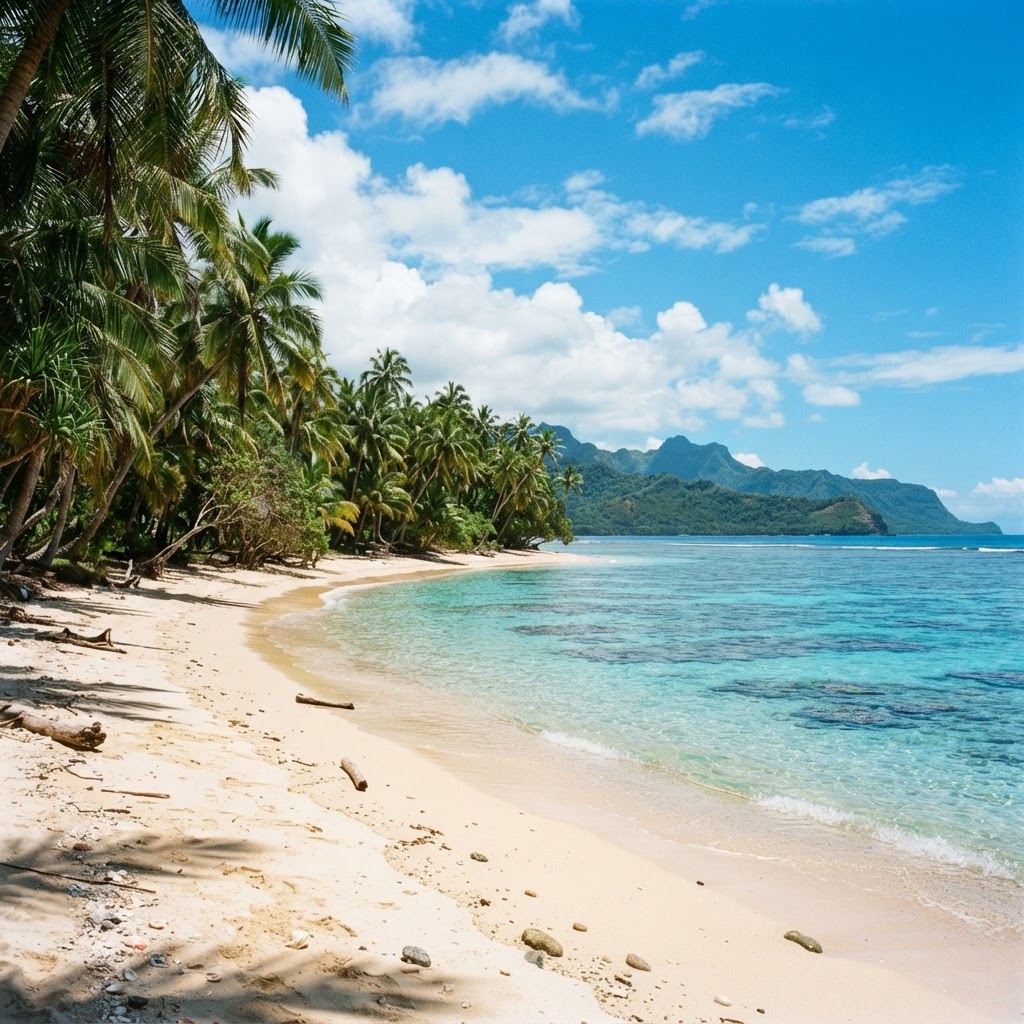
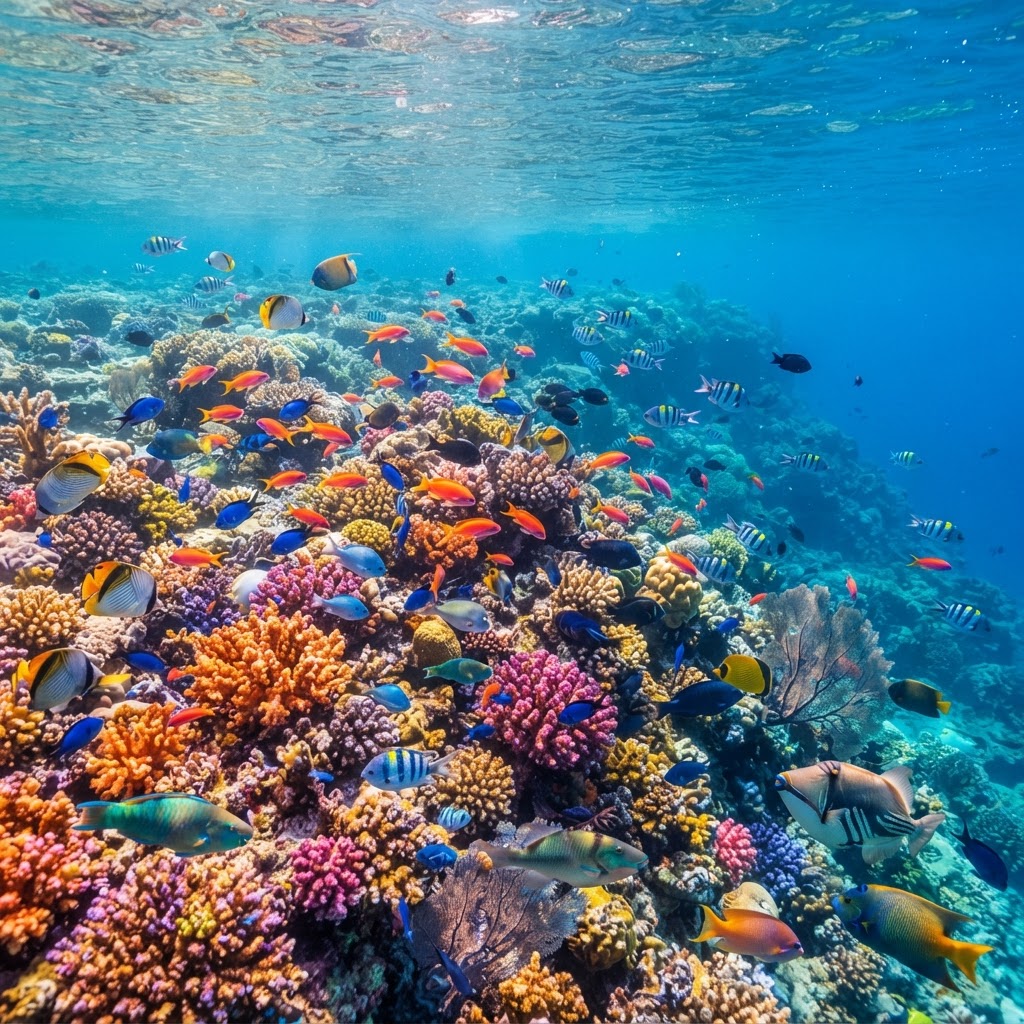

Fiji in Pictures
A look at what the fare buys — the Mamanuca lagoon from the air, a resort beach at golden hour, the palm and hammock view that sells the islands, the limestone cliffs of the Yasawas, the Coral Coast at sunset and the fruit stalls of Nadi market.
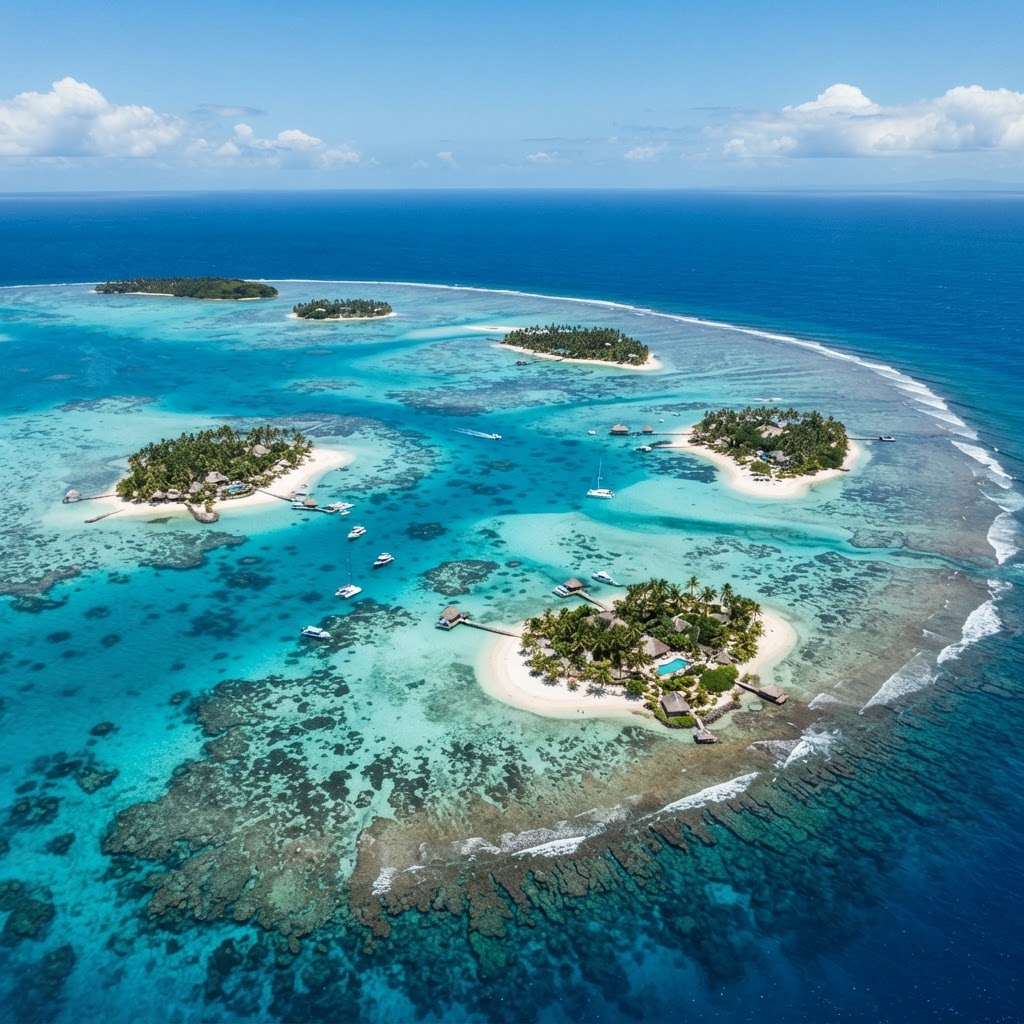


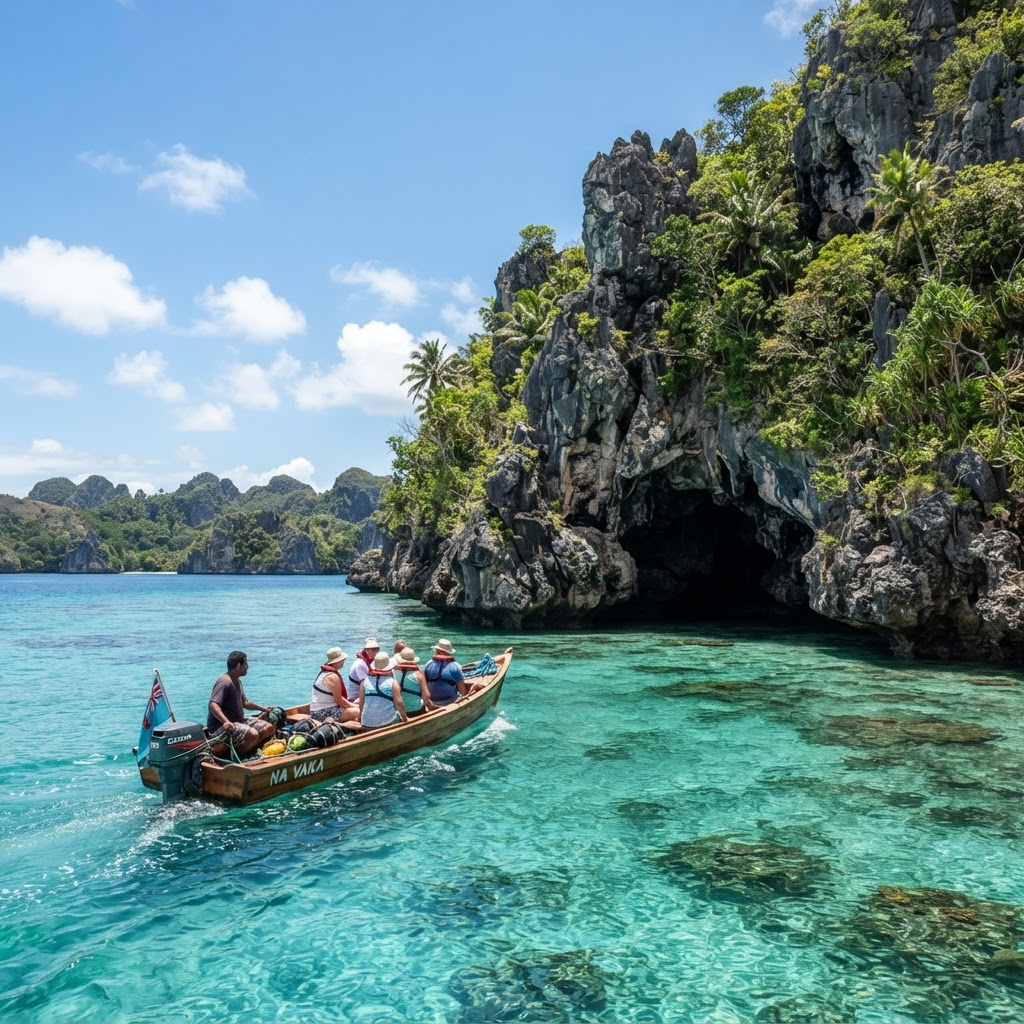


Frequently Asked Questions
How much do flights to Fiji cost?
Economy return fares to Nadi (NAN) typically run from around US$430 to US$800 from Auckland, US$480 to US$950 from Australia, US$850 to US$1,500 from the US West Coast, and US$1,300 to US$2,200 from Europe or the Gulf. The spread comes from season, how far ahead you book and where you change planes. February, March and November are the cheapest months, while July, August and the second half of December are the most expensive. Booking three to five months ahead is usually enough to reach the lower end of the range, and fares bought inside three weeks of departure are commonly double the entry price.
What is the cheapest city to fly to Fiji from?
Auckland and Brisbane are consistently the cheapest origin cities for flights to Fiji, because they are the shortest sectors into Nadi and carry the most competition, including low-cost operators. Sydney and Melbourne follow closely. From outside the region, the US West Coast is the cheapest long-haul gateway, with Los Angeles and San Francisco fares often 30 to 40 per cent below equivalent fares from Europe. If you are flying from Europe or the Gulf, routing through Los Angeles, Singapore or Sydney rather than taking a single-carrier connection usually produces the lowest total price.
What is the cheapest month to fly to Fiji?
February is generally the cheapest month to fly to Fiji, with March and November close behind. These fall outside the Australian and New Zealand school holidays and outside the peak dry-season travel window, so demand drops and the fare buckets stay open longer. February is also the height of the wet season, which is why prices are low — expect short, heavy afternoon showers and high humidity rather than all-day rain. The most expensive months are July and August, driven by the Australian winter holidays, and the second half of December around Christmas and New Year.
Which airlines fly to Fiji?
Fiji Airways is the national carrier and operates the widest network into Nadi, including nonstop flights from Los Angeles, San Francisco, Honolulu, Vancouver, Sydney, Melbourne, Brisbane, Auckland, Christchurch, Singapore and Tokyo. Virgin Australia and Qantas compete from Australia, Jetstar operates low-cost services from Sydney, Melbourne and Brisbane, Air New Zealand flies from Auckland and seasonally Christchurch, and United Airlines connects San Francisco. Fares from Australia and New Zealand are the most competitive, which is why the region has the lowest prices into Fiji.
How far in advance should I book flights to Fiji?
Book three to five months ahead for travel in July, August or December, and two to three months ahead for the shoulder and low seasons. Fiji fares behave like most leisure routes: the cheapest buckets open around six months out, get consumed steadily through the peak booking window, and rise steeply inside six weeks of departure. Sale fares from Fiji Airways and Virgin Australia appear several times a year and are usually worth waiting a few weeks for if your travel is in the low season. Anything inside three weeks is almost always expensive.
Is it cheaper to fly to Nadi or Suva?
Nadi is almost always cheaper and always the better choice for an international arrival. Nadi International Airport (NAN) is Fiji's main long-haul gateway and takes all the nonstop flights from Australia, New Zealand, the US and Asia. Suva's Nausori Airport handles domestic and a small number of regional services, and there is no long-haul international option. Fly into Nadi, then either take a domestic flight to Suva or drive the 190km Coral Coast road, which takes around three and a half hours.
Do I need a visa to travel to Fiji?
Most visitors do not need a visa for tourism in Fiji, including travellers from Australia, New Zealand, the United States, the United Kingdom, Canada and the European Union. Entry is normally granted on arrival for stays of up to four months, provided you hold a return or onward ticket, a passport valid for at least six months beyond your arrival date, and proof of accommodation. Travellers from other countries should check the current requirements with the Fiji Immigration Department before booking, and every passenger should confirm entry rules close to departure, since they can change.
How much does it cost to get from Nadi Airport to the islands?
Transfers from Nadi to the Mamanuca and Yasawa islands are a significant addition to the flight price. A shared speedboat or catamaran transfer to the closest Mamanucas runs around US$60 to US$120 per person each way, while a private water taxi costs US$250 to US$500. Further out, the Yasawa Flyer catamaran charges by sector, roughly US$150 to US$250 return, and outer-island resorts served by plane add US$100 to US$250 each way. Book the transfer with the resort when you book the flight — spaces are limited and last-minute pricing is higher.
Keep Exploring Fiji
Flights to Fiji
Airlines, routes and booking advice for every gateway into Nadi International.
Cheapest Time to Fly to Fiji
Month-by-month low and peak seasons, and when sale fares appear.
Average Flight Prices to Fiji
What travellers actually pay from Australia, New Zealand and the US.
Airlines Flying to Fiji
Every carrier serving Fiji, its routes and what its fares include.
How Long Are Flights to Fiji?
Nonstop and connecting flight times from each major origin city.
International Flights to Fiji
The full international schedule into Nadi and Nausori airports.
Fiji Airports
Nadi and Nausori terminals, transfers, lounges and onward transport.
Flights to Nadi
Fares and schedules into Fiji’s main international gateway.
Flights to Suva
How to reach the capital, including the Nadi connection and Coral Coast drive.
Things to Do in Nadi
Sabeto mud pools, island day trips, markets and where to eat.
What to Wear in Fiji in November
Packing for the warm, humid low season on a budget fare.
Does Qantas Fly Direct to Fiji?
Which Australian cities have nonstop Qantas service to Nadi.
Book Your Flight to Fiji
Start with live fares: search flights into Nadi from your city, price the midweek departures and, if your dates are flexible, move the trip into February, March or November for the lowest prices of the year. Then book the Fiji end in one go — a resort or hotel on Denarau, the Coral Coast or the islands, a rental car from Nadi Airport, a Fiji eSIM so your phone works on landing, a bike for the coastal roads and the island tours that sell out in peak season. Reserve the resort transfer with the flight, and the price you see at booking is the price you actually pay.